



Crypto Wallet for Buying Gold & Wallet Hygiene
When you buy gold or silver with Bitcoin or other cryptocurrencies, your wallet choice and
Shop Online 7:00 AM–8:00 PM PST Mon-Sun
FREE Insured Shipping
(307) 201-3513 Text or Call Mon-Fri
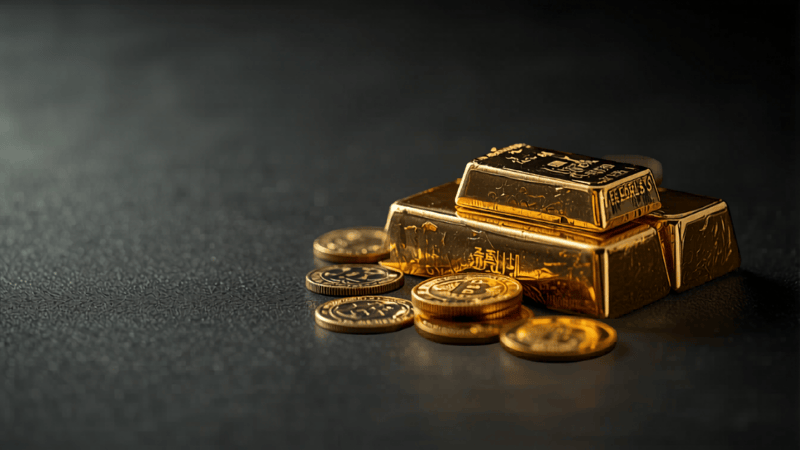
This article is for informational and educational purposes only and does not constitute financial, investment, legal, or tax advice.
Crypto has changed the way many people think about money, ownership, and financial independence. It has introduced a much wider audience to ideas that were once more niche, including self-custody, counterparty risk, monetary debasement, and the importance of holding assets outside traditional financial institutions. For many people, crypto was not simply a new investment category. It was a gateway into deeper questions about what wealth is, what makes money durable, and how value can be preserved over time.
That shift in thinking has been valuable. It has encouraged people to look beyond convenience and ask harder questions about financial systems, trust, and personal control. Yet even with all of crypto’s innovation, physical precious metals still hold an important place that digital assets cannot fully replace. Physical precious metals offer tangibility, historical legitimacy, simplicity of ownership, and independence from digital infrastructure. In a world that is becoming more virtual, those qualities still matter.
One of crypto’s biggest contributions has been cultural as much as financial. It forced a generation of investors to think more carefully about direct ownership. Instead of assuming that an account balance always equals control, many people began to understand the difference between holding an asset yourself and relying on an intermediary. That awareness has been healthy.
Once people understand self-custody, it becomes easier to understand the long-standing appeal of gold and silver. Precious metals have represented direct ownership for centuries. A person who holds a gold coin or silver bar is not depending on an app, platform, or institution to validate its existence. It is already there, physically present, and recognized across borders and generations. Crypto revived the conversation, but precious metals have been answering many of these concerns for a very long time.
Physical precious metals still matter because they offer something digital assets cannot fully replicate: tangible value outside digital systems. A gold bar does not need an internet connection. A silver coin does not depend on a protocol, an exchange, or a wallet interface. It exists independently of software and can be stored, verified, transferred, and understood without a technological layer standing between the owner and the asset.
That tangibility creates a different kind of confidence. In a world where more wealth is increasingly abstract, physical bullion remains real in the most literal sense. You can hold it, secure it, and pass it on. That does not make it superior in every possible use case, but it does make it uniquely durable. For long-term wealth preservation, that kind of durability deserves serious attention.
Digital assets can be powerful, but they always rely on some combination of electricity, devices, connectivity, and user competence. Even when properly self-custodied, crypto still requires operational knowledge. Keys must be protected, transactions must be handled correctly, and access procedures must be maintained over time. Mistakes can be expensive and, in some cases, irreversible.
Physical precious metals carry their own responsibilities, especially around storage and verification, but the risk profile is fundamentally different. There is no smart contract bug in a gold coin. There is no protocol exploit in a silver round. There is no wallet hack that can remotely drain a properly stored bar of bullion. Tangible assets may not be flashy, but they remove entire categories of technological and platform risk. That simplicity is part of their strength.
One of the biggest mistakes investors make is assuming every asset should serve the same purpose. Crypto is often approached as a high-conviction growth asset, a monetary alternative, or a bet on digital infrastructure. That may be appropriate for some investors. However, physical gold and silver are often better understood as stabilizing assets rather than speculative ones.
Gold, especially, has long been valued for preserving purchasing power over time. Silver tends to be more volatile, but it still belongs to the hard asset category and remains attractive because of its affordability, utility, and long monetary history. These assets are not meant to replace every other part of a portfolio. Instead, they provide ballast. They can serve as a store of value when markets are unstable, confidence is weak, or financial conditions become more uncertain.
Crypto is relatively new. Precious metals are not. That alone does not settle every argument, but it does matter. Gold and silver have been recognized as money, wealth, and reserve assets across civilizations for thousands of years. They did not earn that status through branding or novelty. They earned it because of their properties: scarcity, durability, divisibility, portability, and universal recognition.
Historical trust still matters in finance. In calm times, people tend to prioritize convenience and growth. In uncertain times, they often return to assets with a long record of surviving political, monetary, and institutional change. Physical bullion continues to benefit from that deep-rooted trust. It is not dependent on a new model being adopted. It already has a place in the historical memory of markets and societies.
Crypto is often associated with autonomy and self-sovereignty, and in many ways that is fair. However, digital assets still create digital footprints. Public blockchains can be analyzed, transactions can be tracked, and many users still interact with exchanges or service providers that collect extensive personal information. Digital freedom often exists within a more visible framework than many people first assume.
Physical gold and silver offer a different form of independence. They are not recorded on a public blockchain, and they do not require digital rails to function as stores of value. For some buyers, that matters not because they are trying to disappear, but because they value discretion, resilience, and reduced dependency on increasingly monitored systems. Physical ownership has a simplicity and quietness that many investors still value.
Another overlooked advantage of physical bullion is that it is easier to understand across generations. A gold coin does not require a tutorial on wallets, firmware, multisig, or seed phrase inheritance. A silver bar is intuitive. Its value may fluctuate, but its nature is clear. That matters when families think about legacy, estate planning, or long-term asset ownership.
Wealth preservation is not only about performance. It is also about transferability and comprehension. An asset can only preserve value across generations if future owners can realistically access, understand, and appreciate it. Physical metals have a strong advantage here. They are simple, recognizable, and historically familiar. In that sense, they are not only stores of value but also practical vehicles for passing wealth forward.
Too many conversations frame this topic as a contest. That is usually the wrong approach. The better question is not whether crypto or physical bullion must win. The better question is what each asset does well, where each one carries weaknesses, and how they may complement one another.
Crypto can offer portability, upside potential, and an alternative to traditional financial rails. Physical precious metals can offer tangibility, stability, privacy, and independence from digital systems. Those strengths are different, not identical. For many investors, the strongest long-term approach may involve understanding both categories rather than treating them as ideological opposites. What matters most is building a form of wealth that can endure different kinds of risk.
Crypto has earned its place in modern financial conversations. It has challenged assumptions, broadened awareness of self-custody, and pushed more people to think carefully about ownership and monetary systems. That is valuable. Still, it has not made physical bullion obsolete. If anything, it has helped more people understand why tangible hard assets still matter.
Physical precious metals remain relevant because they offer something that digital wealth cannot fully replace. They are tangible, historically trusted, globally understood, and free from the technological layers that digital assets require. For investors focused on resilience, long-term thinking, and durable wealth preservation, gold and silver still deserve a meaningful place in the conversation.
Physical precious metals still matter because they provide tangible value outside digital systems. Gold and silver do not rely on software, exchanges, or internet access to exist as stores of value.
Gold and silver are not necessarily better than crypto in every situation. They simply serve different purposes. Crypto may offer portability and upside, while physical precious metals offer stability, tangibility, and long-term historical trust.
Some crypto investors buy physical gold and silver because they already value self-custody, financial independence, and assets outside traditional systems. Precious metals often align naturally with that mindset.
Yes. Physical bullion has long been used as a tool for wealth preservation because it is tangible, scarce, widely recognized, and not directly dependent on financial institutions or digital infrastructure.
The main difference is that crypto is digital and relies on technological infrastructure, while physical precious metals are tangible assets that can be held directly and understood without a digital layer.

JAMES HARGROVE - Precious Metals Specialist
James brings over 14 years of experience in the precious metals industry, specializing in gold and silver bullion markets. He has an in-depth knowledge of market pricing, coin grading, and the factors that drive spot price movements. James advises Veldt’s customers on building a balanced physical metals portfolio and ensures every transaction reflects fair, real-time market value. When he’s not analyzing the markets, he is an avid collector of rare pre-1933 U.S. gold coins.
VELDT
861 6th Ave #504
San Diego, CA 92101
By Appointment Only. Contact us to make an appointment.
When you buy gold or silver with Bitcoin or other cryptocurrencies, your wallet choice and

As cryptocurrency adoption grows, more investors are looking for ways to convert Bitcoin into tangible

When people start buying precious metals, one of the first questions they ask is: Should

Gold bars remain one of the most efficient and straightforward ways to own physical bullion.
|
Gold: 4,786.82 | Silver: 78.40 | Platinum: 2,081.73 | Palladium: 1,538.06 |