
Silver Dimes Years: What Year Dimes Are Silver?
Learn which silver dime years to look for, why 1964 and earlier U.S. dimes matter, and how old silver dimes can be worth more than
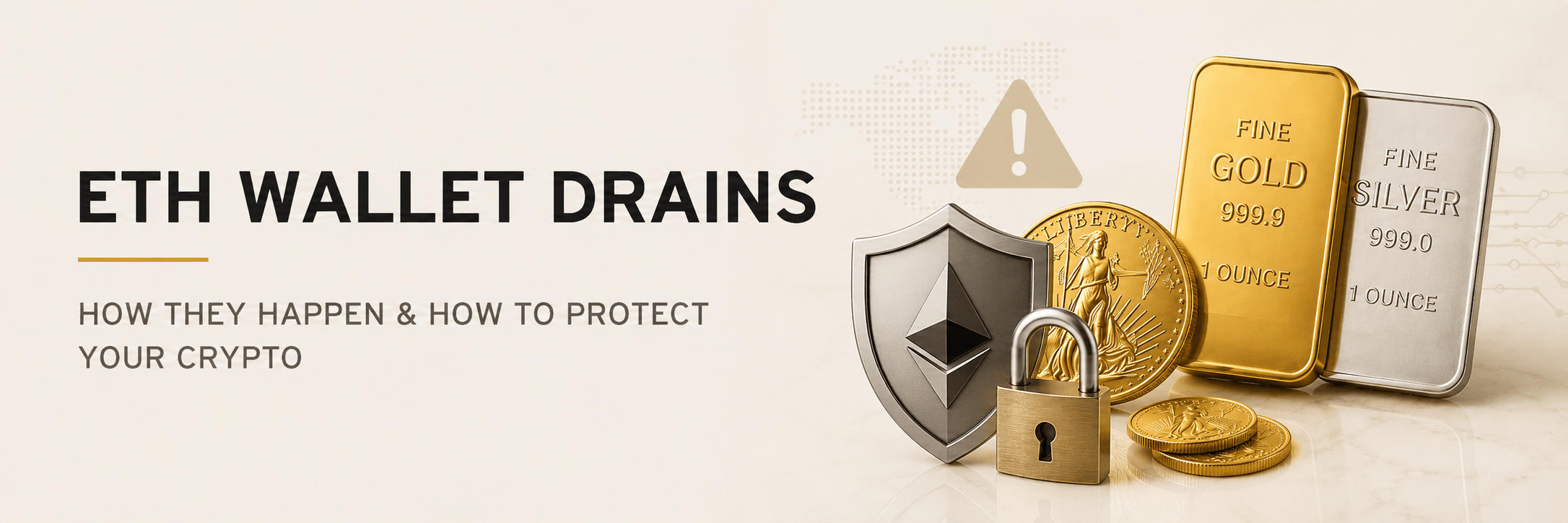
ETH wallet drains happen when scammers trick users into signing malicious messages, approving token permissions, connecting to fake websites, or revealing seed phrases. To reduce risk, use a hardware wallet, verify every transaction, revoke unnecessary token approvals, avoid unknown links and airdrops, and move assets to a fresh wallet if compromise is suspected.
ETH wallet drains are one of the most dangerous risks for anyone using Ethereum, DeFi, NFTs, or crypto payments. A wallet drain happens when a scammer gains the ability to move assets out of your wallet. Sometimes the attack steals ETH directly. Other times, it drains tokens, NFTs, stablecoins, or other assets after you approve a malicious contract.
The scary part is that many wallet drains do not start with a “hack” in the movie sense. They often start with one rushed click. A fake mint page, a fake airdrop, a fake support account, a malicious token approval, or a confusing signature request can give an attacker exactly what they need.
For crypto holders who plan to buy gold, silver, or other physical assets, wallet security matters before checkout ever begins. If you self-custody crypto, you are responsible for protecting the wallet that holds your funds. That responsibility can be empowering, but it also means mistakes can be expensive.
An ETH wallet drain is a scam or attack that empties assets from an Ethereum wallet. The attacker may drain ETH, ERC-20 tokens, NFTs, or other assets connected to that address.
Some drains happen because the victim signs a malicious transaction. Others happen because the victim approves a smart contract to spend tokens on their behalf. Scammers often try to make the approval look harmless by disguising it as a login, a claim, an airdrop, a mint, a verification step, or a wallet update.
Ethereum warns users about common crypto scam patterns and recommends careful verification before signing transactions or entering sensitive information. For general wallet safety guidance, Ethereum’s official documentation offers a helpful overview of common crypto scam patterns and security habits.
In plain terms, a wallet drain is not always about someone knowing your seed phrase. Sometimes the attacker simply tricks your wallet into giving permission.
Most ETH wallet drains rely on social engineering. The scammer needs you to take an action. That action may be connecting your wallet, signing a message, approving a transaction, or entering your recovery phrase into a fake website.
A common version is the fake website scam. The page may look like a real exchange, NFT project, bridge, token claim, or wallet tool. Once you connect your wallet, the site asks for a signature or transaction approval. If you approve it without understanding what it does, the attacker may gain access to your assets.
Another version is malicious token approval. Token approvals allow smart contracts to spend certain tokens from your wallet. Legitimate DeFi apps use approvals all the time. However, malicious approvals can give scammers permission to move tokens later. To understand why token permissions matter, Ethereum also explains how to revoke token access.
Signature phishing is also common. In this type of attack, scammers trick users into signing a message that may not look like a normal asset transfer. The danger is that a signature can still authorize actions that put your wallet at risk. That is why you should slow down before approving anything, especially from a website you found through an ad, a direct message, or a social media link.
Wallet drains are dangerous because blockchain transactions are usually final. If a scammer drains your ETH or tokens, there may be no bank, card issuer, or payment processor that can reverse the transaction.
That finality is part of what makes crypto powerful. It is also what makes Ethereum wallet security so important. The same self-custody that gives you control also removes many traditional safety nets. MetaMask’s support center explains why unauthorized wallet transactions generally cannot be reversed.
This is why buyers should not use one wallet for everything. A wallet that connects to DeFi apps, NFT sites, bridges, and unknown token claims should not also hold your long-term savings. A cleaner wallet structure reduces the damage if one address is compromised.
For broader industry context, Chainalysis publishes research on crypto theft, scams, and illicit transaction trends. The point is simple: wallet drains are not rare edge cases. They are a major part of the modern crypto risk landscape.
Many ETH wallet drain scams have patterns. A site pressures you to act quickly. A fake support account asks for your seed phrase. A social media post promises a free airdrop. A message says you must “verify” your wallet immediately. A website asks you to sign something vague or confusing.
Another red flag is a transaction that does not match what you think you are doing. If you are only trying to view a page, there should usually be no reason to approve token spending. If you are claiming a small reward, be suspicious of any transaction that grants broad permissions.
Be especially careful with search ads, Discord links, Telegram messages, X replies, fake customer support accounts, and direct messages. Scammers often copy branding from real projects, then change the URL by one letter or use a similar-looking domain.
The safest habit is simple: slow down. Wallet drains rely on urgency. A legitimate opportunity should survive a few minutes of verification.
The best protection is layered security. No single habit solves every risk, but several habits together can dramatically reduce your exposure.
Use a hardware wallet for meaningful balances. A hardware wallet helps protect private keys from malware and browser-based attacks. However, it does not protect you from approving a malicious transaction yourself, so you still need to read what you sign.
Keep separate wallets for separate purposes. Use one wallet for long-term storage, another for everyday transactions, and a small “burner” wallet for testing unknown sites. Do not connect your main wallet to random dApps.
Review token approvals regularly. If you no longer use an app, revoke unnecessary permissions. This is especially important after interacting with DeFi protocols, NFT marketplaces, bridges, or unfamiliar websites.
Never enter your seed phrase into a website. A legitimate wallet support team should not need your recovery phrase. Anyone asking for it is almost certainly trying to steal your funds.
Verify URLs manually. Bookmark trusted sites instead of clicking links from social media or search ads. Fake websites can look nearly identical to real ones.
If you suspect a wallet drain, act quickly but carefully. First, do not keep using the compromised wallet as if nothing happened. Move remaining funds to a new secure wallet if you can do so safely.
Next, revoke token approvals from the compromised address where possible. This may not recover stolen assets, but it can reduce the risk of additional tokens being drained.
Then document everything. Save transaction hashes, wallet addresses, screenshots, website URLs, social media handles, and timestamps. This may help if you report the scam, work with an investigator, or need records for tax or accounting purposes.
Do not trust “recovery experts” who promise to get your crypto back for an upfront fee. Many recovery offers are secondary scams that target people who have already been victimized. If someone claims they can reverse an Ethereum transaction for a fee, treat that as a major red flag.
At Veldt, many buyers use crypto because they value self-custody, independence, and the ability to convert digital assets into physical precious metals. That can be a smart strategy for people who want to diversify outside purely digital holdings. However, it works best when your crypto security is already strong.
Before using ETH or any crypto to buy gold, make sure the funds are in a wallet you control safely. Confirm the checkout address carefully. Send the exact amount required during the payment window. Keep records of the transaction, including your crypto cost basis and purchase details.
Buying gold with crypto does not eliminate wallet security risks. It simply moves value from one form into another. Protect the crypto before purchase, then protect the bullion after delivery.
ETH wallet drains are a serious risk because they combine technical complexity with human psychology. Scammers do not always need to break encryption or defeat Ethereum itself. They often just need to trick a user into signing the wrong thing.
The best defense is caution, separation, and verification. Use hardware wallets for meaningful balances. Keep risky activity away from long-term holdings. Revoke old approvals. Avoid unknown links. Never share your seed phrase. Most importantly, slow down before signing anything.
If you use crypto to buy physical gold, wallet safety should be part of your buying process. Secure your ETH first. Then convert into bullion through a reputable dealer, keep clear records, and store your metals responsibly.
ETH wallet drains usually happen when a scammer tricks someone into signing a malicious transaction, approving token spending, connecting to a fake website, or revealing a seed phrase. The attacker then uses that access to move ETH, tokens, or NFTs.
No. Disconnecting a wallet from a website does not automatically remove token permissions. If you granted a contract permission to spend tokens, you may need to revoke that token access separately.
Revoking token approvals can help stop future token transfers if the risk comes from malicious permissions. It cannot undo transactions that already happened, and it may not solve every type of compromise.
Yes. Many buyers prefer using separate wallets for spending, long-term storage, and higher-risk dApp activity. This limits exposure if one wallet interacts with a malicious site or approval.
Often, stolen ETH cannot be reversed or restored through a wallet provider because self-custodial transactions are generally final. Document the incident, report it where appropriate, and be cautious of recovery scams.
Learn which silver dime years to look for, why 1964 and earlier U.S. dimes matter, and how old silver dimes can be worth more than

A practical case study on how a crypto trader could use precious metals to preserve gains, reduce volatility exposure, and build long-term wealth outside digital
Learn how to store silver coins and bullion safely, including tips for handling, organizing, documenting, and protecting silver at home or in secure storage.

Compare silver bars and silver coins so you can understand premiums, storage, resale, liquidity, and which silver option may fit your buying goals.
Now that you understand more about precious metals, Veldt can help you take the next step. Buy gold and silver online, use supported cryptocurrencies at secure checkout, or contact us for local help choosing the right bullion for your goals.
|
Gold: 4,484.34 | Silver: 74.92 | Platinum: 1,933.71 | Palladium: 1,365.22
|