

Silver Dimes Years: What Year Dimes Are Silver?
Learn which silver dime years to look for, why 1964 and earlier U.S. dimes matter, and how old silver dimes can be worth more than
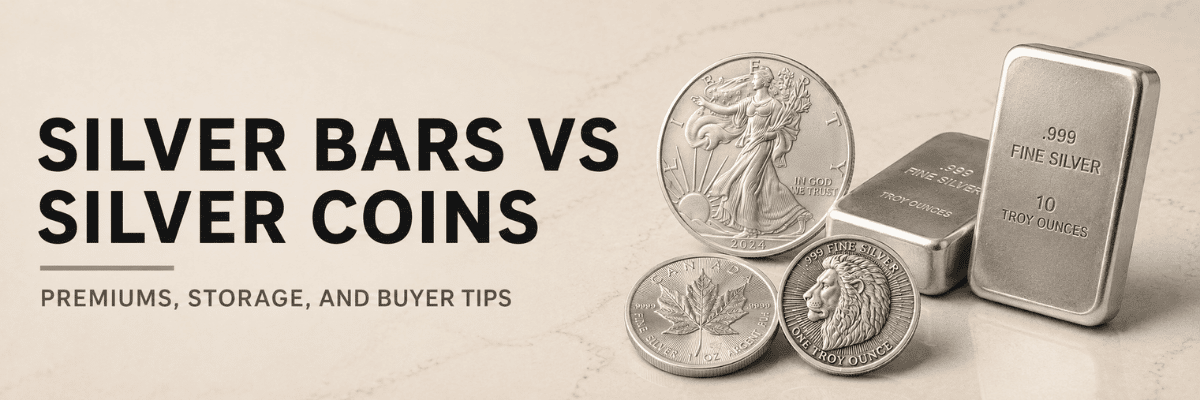
Silver bars are often better for buyers who want efficient storage and lower premiums per ounce, while silver coins may be better for buyers who value recognizability, liquidity, and government-minted trust. The better choice depends on your budget, storage plan, and resale goals.
At some point, most silver buyers face the same decision: should you buy stackable silver bars or recognizable silver coins? The answer depends on what you want your silver to do. If your goal is efficient ounce accumulation, bars may be attractive. If your goal is easy recognition and broad resale appeal, coins may be worth the higher premium.
The comparison of silver bars vs silver coins is not about finding one perfect product for everyone. It is about understanding the tradeoffs. Bars, coins, rounds, and junk silver all have a place in the market, but they solve different problems for different buyers.
This guide explains how silver bars and silver coins differ, why premiums matter, which option may be easier to store or sell, and how to choose the right silver product for your budget and long-term plan.
Silver bars are rectangular bullion products valued mainly for their silver content. They are usually marked with weight, purity, and mint or refinery information. Common sizes include one ounce, five ounces, ten ounces, kilo bars, and 100-ounce bars.
Many buyers like silver bars because they are straightforward. A ten-ounce bar is easy to understand: it is designed to hold ten troy ounces of silver in one compact piece. This makes bars useful for buyers who want to build ounces without collecting many individual coins.
Bars can also be efficient to store. Their shape makes them easier to stack than loose coins, rounds, or mixed junk silver. As your silver position grows, that storage efficiency can become a major advantage.
Silver coins are usually issued by government mints. Modern silver bullion coins often contain a stated amount of silver, such as one troy ounce, and may also carry a legal tender face value. That face value is usually far below the value of the metal inside.
Popular examples include American Silver Eagles, Canadian Silver Maple Leafs, Austrian Silver Philharmonics, and other official mint coins. Buyers often choose these coins because they are widely recognized and easier for many dealers and private buyers to identify.
Government coins often cost more than bars because of mint reputation, demand, and recognizability. That higher premium can still make sense if you value liquidity and trust. You can review official coin background through resources like the United States Mint coin education section before comparing actual market prices.
The main difference is purpose and format. Silver bars are usually designed for efficient bullion ownership by weight. Silver coins are usually designed as official mint products with strong recognition, legal tender status, and broader retail familiarity.
That difference affects pricing. Bars often appeal to buyers who want more silver for each dollar spent. Coins often appeal to buyers who want a product that is easy to recognize, easy to explain, and often easier to sell to a wider group of buyers.
Neither option is automatically better. A buyer who wants low premiums may prefer bars. A buyer who wants stronger resale confidence may prefer coins. A balanced silver stack can include both.
A premium is the amount you pay above the silver’s spot-based metal value. Physical silver usually sells above spot because products must be minted, transported, verified, insured, stored, and sold. The question is how much extra you are paying and why.
Silver bars often have lower premiums per ounce than government silver coins, especially in larger sizes. A ten-ounce bar or kilo bar may cost less per ounce than buying the same amount of silver in individual government coins.
Coins usually cost more because they carry official mint recognition and strong buyer demand. That does not mean coins are overpriced by default. It means part of the price reflects trust, liquidity, and the market’s willingness to pay more for familiar products. Before buying, compare the product price against current silver market references like precious metals price data.
Silver takes up more space than gold for the same dollar value, so storage should not be an afterthought. This is where bars can have a clear advantage. Their rectangular shape makes them easier to stack, label, and organize.
A few ten-ounce bars can be easier to manage than many separate coins. Larger bars may be even more efficient, although they come with less flexibility if you want to sell only a small portion of your silver later.
Coins are still manageable, especially when stored in tubes or original mint packaging. However, once you own a larger quantity, coins can take more space and require more counting. If clean organization matters most, bars are often simpler.
When it is time to sell, recognition matters. A popular government silver coin can be easier for buyers and dealers to identify quickly. Many people already know what an American Silver Eagle or Canadian Silver Maple Leaf is, which can reduce friction during resale.
Silver bars can also be easy to sell, especially when they come from recognized refiners or mints. Clear markings, known brands, and good condition help. However, an obscure bar may require more verification than a widely known government coin.
Coins may also be easier to sell in smaller increments. If you own ten one-ounce coins, you can sell one or two coins at a time. If you own one ten-ounce bar, you usually sell the full bar. That flexibility can matter if you want partial liquidity.
Silver coins can be more flexible because each coin is its own unit. If you need to sell a small amount, coins make that easier. You can sell one, five, or ten coins without disturbing the rest of your holdings.
Bars can be less flexible as size increases. A one-ounce bar is easy to sell in small amounts, but a 100-ounce bar is a bigger transaction. Larger bars may offer better pricing per ounce, yet they also require a buyer who wants that much silver at once.
This is one reason many buyers use a mix. Smaller coins or rounds provide flexibility. Bars provide efficient storage and lower premiums. Together, they can create a more practical silver position.
Beginners often do best with silver they can understand immediately. A one-ounce government coin is easy to recognize. A one-ounce or ten-ounce bar is easy to price by weight. Both can work as a first purchase if the buyer understands the premium.
If you are nervous about resale, start with a well-known silver coin. If you are focused on getting more silver for your budget, compare common silver bars and lower-premium products. Either way, avoid complicated collectibles until you understand bullion basics.
A simple beginner strategy is to buy one recognized coin and one small bar. This gives you a hands-on comparison. You can see how each product is packaged, priced, stored, and valued before committing to a larger purchase.
Silver bars usually deserve the first look if your main goal is low premiums. Larger bars can sometimes offer lower cost per ounce because they package more silver into a single product.
That said, low premium is not the only thing that matters. A bar from an unknown source may be harder to sell than a recognized coin. A slightly higher premium may be reasonable if the product is easier to verify and more trusted in the resale market.
Price-conscious buyers should compare similar products rather than comparing everything at once. Compare ten-ounce bars against other ten-ounce bars. Compare one-ounce coins against other one-ounce coins. Then decide whether the premium difference is worth the recognition difference.
For long-term holding, both silver bars and silver coins can work well. Bars can make long-term storage cleaner because they stack efficiently. Coins can make long-term resale simpler because they are more widely recognized in smaller units.
Think about your future exit plan. If you may sell gradually, coins or smaller bars may be more flexible. If you want to store a larger silver position for years, larger bars may reduce clutter and simplify inventory.
Good records matter either way. Keep purchase receipts, note product types, track quantities, and store your silver securely. The product choice matters, but organization matters just as much once your holdings grow.
Silver bars may make more sense when you want to accumulate ounces efficiently. They are practical for buyers who care about weight, storage, and premium control more than government coin recognition.
Bars can also work well once you already understand silver pricing. A buyer who knows how to compare spot price, premiums, mint reputation, and resale options may be comfortable buying larger bars to lower average cost per ounce.
They may be less ideal if you want maximum flexibility. Selling a large bar requires finding a buyer for the entire bar. If you want to sell small amounts over time, coins, rounds, or smaller bars may be better.
Silver coins may make more sense when you value recognition, trust, and flexibility. A widely known government coin can be easier to sell, easier to price, and easier for a new buyer to understand.
Coins may also be better if you want one-ounce units that can be sold individually. This matters for buyers who do not want to liquidate a larger bar all at once.
The tradeoff is cost. Government coins often carry higher premiums than bars. Before buying heavily, decide whether the recognition advantage is worth the added price for your specific goals.
You do not have to choose only silver bars or only silver coins. Many buyers use both because each product solves a different problem. Bars can help you build ounces efficiently. Coins can help with recognition and smaller resale flexibility.
For example, a buyer might use ten-ounce bars for core silver storage and one-ounce government coins for liquidity. Another buyer might start with coins for confidence, then add bars later once they understand premiums and storage.
The best mix depends on your budget, your space, your resale plan, and how involved you want to be with the silver market. A simple, well-documented mix is usually better than a random pile of products bought without a plan.
The choice between silver bars vs silver coins comes down to premiums, storage, recognition, and flexibility. Bars are often better for efficient ounce accumulation and storage. Coins are often better for recognizability, trust, and smaller-unit resale.
Beginners should avoid overcomplicating the decision. Start with silver you understand, compare premiums carefully, and choose products that match your reason for buying. If you are unsure, a small mix of bars and coins can teach you more than theory alone.
At Veldt, customers can buy silver, gold, platinum, and palladium online with secure checkout, including supported cryptocurrencies. Whether you prefer silver bars, silver coins, rounds, or junk silver, the goal is to own clear, authentic, fairly priced metal that fits your long-term plan.
Silver bars may be better for buyers who want lower premiums and efficient storage, while silver coins may be better for buyers who value recognizability, liquidity, and smaller resale units.
Silver bars often have lower premiums per ounce than government silver coins, especially in larger sizes. However, premiums vary by market conditions, mint, product size, and demand.
Popular government silver coins are often easier to sell because they are widely recognized. Silver bars can also be liquid, especially when they come from known refiners or mints.
Beginners can buy either. Silver coins may feel more recognizable, while small silver bars can be easier to compare by weight and premium. A small mix of both can be a practical starting point.
Many beginners start with one-ounce, five-ounce, or ten-ounce silver bars because they are easier to price, store, and sell than very large bars. Larger bars may offer lower premiums but less flexibility.
Learn which silver dime years to look for, why 1964 and earlier U.S. dimes matter, and how old silver dimes can be worth more than

A practical case study on how a crypto trader could use precious metals to preserve gains, reduce volatility exposure, and build long-term wealth outside digital

Learn how to store silver coins and bullion safely, including tips for handling, organizing, documenting, and protecting silver at home or in secure storage.
Compare silver bars and silver coins so you can understand premiums, storage, resale, liquidity, and which silver option may fit your buying goals.
Now that you understand more about precious metals, Veldt can help you take the next step. Buy gold and silver online, use supported cryptocurrencies at secure checkout, or contact us for local help choosing the right bullion for your goals.
|
Gold: 4,484.34 | Silver: 74.92 | Platinum: 1,933.71 | Palladium: 1,365.22
|