
Silver Dimes Years: What Year Dimes Are Silver?
Learn which silver dime years to look for, why 1964 and earlier U.S. dimes matter, and how old silver dimes can be worth more than
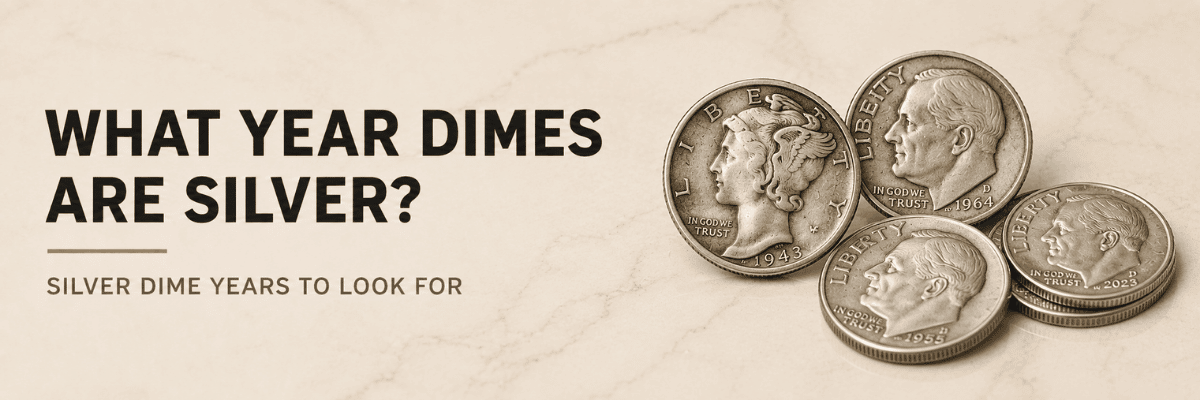
U.S. dimes dated 1964 and earlier are generally 90% silver. Most 1965 and later dimes are copper-nickel clad and do not contain silver for normal circulation.
Old dimes are easy to overlook. They are small, familiar, and often mixed into jars, drawers, inherited collections, or loose change without much thought. But if you know the right silver dimes years, a dime can be worth more than ten cents because of the silver inside it.
The short rule is simple: U.S. dimes dated 1964 and earlier are generally 90% silver. Most dimes dated 1965 and later are copper-nickel clad and do not contain silver for normal circulation. That single date cutoff is the easiest starting point for beginners.
This guide explains what year dimes are silver, which dime designs to look for, how silver dime value works, and why old dimes are often grouped with junk silver, silver quarters, and other 90% silver coins.
U.S. dimes dated 1964 and earlier are generally silver dimes. These coins were made with 90% silver and 10% copper, which gives them value beyond their ten-cent face value.
The most common silver dimes people find are Roosevelt dimes from 1946 through 1964 and Mercury dimes from 1916 through 1945. Older Barber dimes from 1892 through 1916 also contain silver, though they are less likely to appear in ordinary change and may have more collector interest depending on date and condition.
The United States Mint explains that silver was removed from the dime in 1965. You can review the official U.S. Mint dime history for background on the dime and its design changes.
The easiest silver dime years to remember are 1964 and earlier. If you see a U.S. dime dated 1964, 1963, 1962, or any earlier year, set it aside and evaluate it separately from regular clad dimes.
For most beginners, Roosevelt silver dimes are the simplest place to start. These dimes were issued from 1946 onward, and examples dated 1946 through 1964 are generally 90% silver. They look similar to modern Roosevelt dimes, so the date matters.
Mercury dimes are also silver. They were issued before Roosevelt dimes and are easy to recognize because the obverse shows Liberty wearing a winged cap. Many people call them Mercury dimes even though the design is not actually the Roman god Mercury.
Yes. A 1964 U.S. dime is generally a 90% silver dime. For many beginners, 1964 is the most important date to remember because it was the last regular year before silver was removed from circulating dimes.
A 1964 dime is not automatically rare, but it is usually worth more than face value because of its silver content. Its value depends on silver spot price, condition, mint mark, and whether the coin has collector demand beyond its metal value.
If you find a 1964 dime, do not spend it as ordinary change. Keep it separate, avoid cleaning it, and compare it against current silver pricing before deciding whether to hold, sell, or add it to a junk silver group.
Most 1965 dimes are not silver. In 1965, the dime changed from 90% silver to a copper-nickel clad composition for normal circulation.
This is why a 1965 dime is usually treated differently from a 1964 dime. The dates are only one year apart, but the metal content changed. For everyday coin sorting, 1964 and earlier is the silver range to check first.
There can be unusual coins, errors, proofs, and special issues that require expert review. However, for normal circulating U.S. dimes, 1965 and later are usually not silver.
The silver dime designs beginners are most likely to encounter are Roosevelt dimes, Mercury dimes, and Barber dimes. Roosevelt dimes dated 1946 through 1964 are generally 90% silver. Mercury dimes dated 1916 through 1945 are also 90% silver. Barber dimes dated 1892 through 1916 are silver as well.
Roosevelt silver dimes can be easy to miss because modern clad Roosevelt dimes look similar. Always check the date. A Roosevelt dime dated 1964 or earlier deserves a closer look, while most Roosevelt dimes dated 1965 or later are ordinary clad coins.
Mercury and Barber dimes are older and may be more obvious when you see them. If you find one, do not clean it. Older designs can sometimes carry collector value, especially if the date, mint mark, and condition are stronger than common circulated examples.
A silver dime is usually worth more than ten cents because it contains silver. The exact silver dime value changes with the current silver price, the coin’s condition, the date, the mint mark, and market demand.
For common circulated silver dimes, the value is often tied mostly to metal content. These coins are frequently grouped with junk silver because they are usually valued for silver rather than rare numismatic demand.
Before estimating value, check the current silver market using a reputable benchmark such as precious metals price data. Then remember that retail prices, dealer buy prices, and melt value are not always the same.
Silver dimes are often called junk silver when they are common circulated coins valued mainly for their silver content. The word “junk” does not mean the coins are worthless. It simply means they are usually not rare collector coins.
Common Roosevelt and Mercury dimes may be bought and sold by face value groups. For example, a group of 100 silver dimes equals $10 face value. In the junk silver market, face value is often used as a shortcut to estimate total silver content.
Many buyers like silver dimes because they are small, recognizable, and naturally fractional. They can be useful for people who want smaller silver pieces instead of only larger bars or one-ounce rounds.
Start with the date. If the dime is dated 1964 or earlier, it is generally a silver dime. If it is dated 1965 or later, it is usually a clad dime for normal circulation.
Next, look at the design. Mercury dimes and Barber dimes are older silver designs. Roosevelt dimes require more date checking because modern Roosevelt dimes are still common today.
Finally, avoid relying only on color or sound. Wear, toning, lighting, and dirt can make coins look different. The date is the simplest beginner-friendly clue, and a reputable dealer can help evaluate anything unusual.
In most cases, yes. If you find a silver dime at face value, it is usually worth keeping until you know what it is worth. A silver dime may be small, but a group of them can add up quickly.
Keep silver dimes separate from regular change. Do not clean them, polish them, or store better-looking older examples loosely with modern coins. Even common silver dimes deserve basic care.
If you have a larger group, sort them by design and denomination. Separate Roosevelt dimes, Mercury dimes, and Barber dimes if possible. This makes it easier to estimate value, compare offers, or decide whether to keep them as part of a silver position.
Silver dimes and silver quarters are both common forms of 90% silver coinage. The main difference is denomination and size. Dimes are smaller, while quarters contain more silver per coin.
Silver dimes can be useful for smaller fractional silver. Silver quarters are also popular because they are familiar and easy to count in rolls or face value groups. Many junk silver buyers hold both because each denomination has a practical role.
If you already read our guide to what quarters are silver, the dime rule will feel familiar: for normal circulation, 1964 and earlier is the key range to remember.
The most important silver dimes years to remember are 1964 and earlier. U.S. dimes dated 1964 or before are generally 90% silver, while most 1965 and later dimes are copper-nickel clad for normal circulation.
Roosevelt silver dimes, Mercury dimes, and Barber dimes are the main designs beginners should recognize. Some may be valued mostly for silver content, while better dates or stronger-condition coins may have collector value too.
At Veldt, customers can buy silver, gold, platinum, and palladium online with secure checkout, including supported cryptocurrencies. Whether you are sorting silver dimes, learning about junk silver, or building a larger bullion position, understanding the years and metal content helps you make better precious metals decisions.
U.S. dimes dated 1964 and earlier are generally 90% silver. Most dimes dated 1965 and later are copper-nickel clad for normal circulation.
Yes. A 1964 U.S. dime is generally a 90% silver dime and can be worth more than face value depending on silver prices, condition, mint mark, and demand.
Most 1965 dimes are not silver. In 1965, circulating U.S. dimes changed from 90% silver to copper-nickel clad composition.
Beginners should look for Roosevelt dimes dated 1946 through 1964, Mercury dimes dated 1916 through 1945, and Barber dimes dated 1892 through 1916.
Yes, silver dimes are usually worth keeping until you know their value. Keep them separate from regular change, avoid cleaning them, and compare their value against current silver prices.
Learn which silver dime years to look for, why 1964 and earlier U.S. dimes matter, and how old silver dimes can be worth more than

A practical case study on how a crypto trader could use precious metals to preserve gains, reduce volatility exposure, and build long-term wealth outside digital
Learn how to store silver coins and bullion safely, including tips for handling, organizing, documenting, and protecting silver at home or in secure storage.
Compare silver bars and silver coins so you can understand premiums, storage, resale, liquidity, and which silver option may fit your buying goals.
Now that you understand more about precious metals, Veldt can help you take the next step. Buy gold and silver online, use supported cryptocurrencies at secure checkout, or contact us for local help choosing the right bullion for your goals.
|
Gold: 4,313.92 | Silver: 67.74 | Platinum: 1,778.21 | Palladium: 1,234.99
|