
Silver Dimes Years: What Year Dimes Are Silver?
Learn which silver dime years to look for, why 1964 and earlier U.S. dimes matter, and how old silver dimes can be worth more than
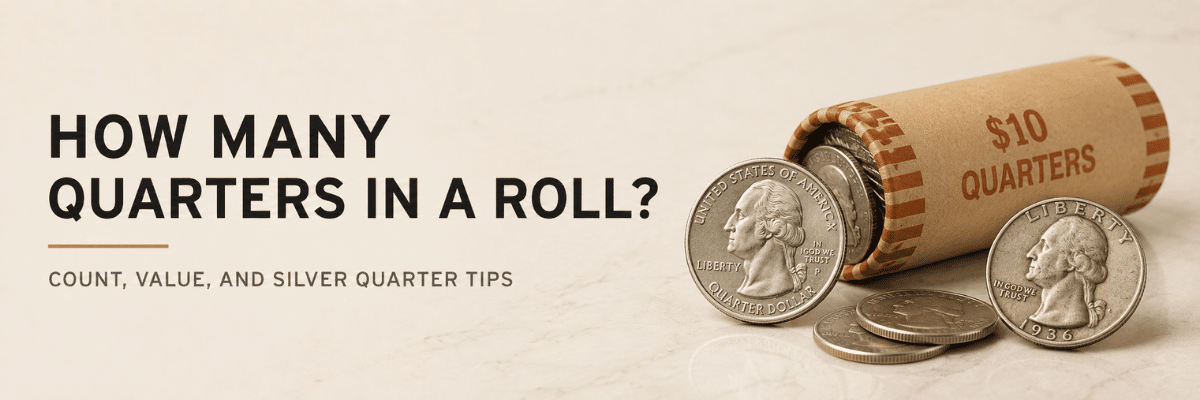
A standard roll of quarters contains 40 quarters and has a face value of $10. Older silver quarters may be worth more than face value because of their silver content.
A standard roll of quarters contains 40 quarters and has a face value of $10. That simple answer is usually what people are looking for when they search how many quarters in a roll, but there is more to understand if you are sorting change, checking old coins, or wondering whether any quarters are worth more than face value.
Most modern quarter rolls are just convenient wrappers for everyday change. However, older quarters can sometimes have precious metals value, especially if they were minted before the United States removed silver from circulating quarters. For buyers and collectors, quarter rolls can be a simple starting point for learning the difference between face value, collectible value, and metal value.
This guide explains how many quarters are in a roll, how much a roll of quarters is worth, why some quarters are silver, and when it makes sense to move from coin-roll curiosity into physical silver or bullion ownership.
There are 40 quarters in a standard roll. Since each quarter is worth 25 cents, a full roll of quarters has a face value of $10.
The math is straightforward: 40 quarters multiplied by $0.25 equals $10. This is why banks, businesses, laundromats, car washes, vending operators, and individuals often use quarter rolls to organize and count change quickly.
If you have loose quarters at home, rolling them can make deposits easier. If you receive a roll from a bank, it should normally contain 40 coins. However, if you are checking older rolls or customer-wrapped rolls, it is still smart to count them and look at the dates before assuming every coin is ordinary modern change.
A regular roll of modern quarters is worth $10 in face value. That means you can spend it, deposit it, or exchange it at its normal dollar value.
However, a roll may be worth more than $10 if it contains silver quarters, rare dates, mint errors, or collectible coins in unusually strong condition. Most rolls you receive from a bank will contain modern clad quarters, but older collections, inherited coin jars, and estate coins are worth checking more carefully.
The key is to separate ordinary spending money from coins that may have collectible or precious metals value. A modern quarter is usually worth 25 cents. A silver quarter, on the other hand, can be worth more because it contains silver. You can compare current bullion pricing against published precious metals price data or live market references before estimating metal value.
Modern U.S. quarters are not made of silver for normal circulation. According to the United States Mint quarter history, silver was removed from the quarter in 1965, and the composition changed to copper-nickel clad.
That means most quarters dated 1965 or later are ordinary clad coins. They may still be collectible in certain cases, but they usually do not carry silver melt value.
Quarters dated 1964 and earlier are the ones beginners usually look for because those circulating quarters were made with 90% silver. If you are searching through old change, inherited coin rolls, or estate collections, checking the date is the first step. A quarter dated 1964 or earlier should be set aside and evaluated separately from regular modern quarters.
A silver quarter is usually worth more than 25 cents because of its silver content. The exact value depends on the current silver price, the coin’s condition, the date, the mint mark, and whether the coin has collectible demand beyond its metal value.
For many common-date silver quarters, the main value comes from silver content. Collectors and dealers often refer to these coins as “junk silver,” but that does not mean the coins are worthless. It simply means they are usually valued more for their metal content than for rare numismatic value.
If you find a silver quarter, avoid cleaning it. Cleaning can reduce collector value and make the coin less desirable. Instead, keep it separate, note the date and mint mark, and compare it against current silver pricing or ask a knowledgeable coin and bullion dealer for an estimate.
Start by confirming the count. A standard roll should contain 40 quarters. Next, check the dates. Quarters dated 1964 or earlier deserve closer attention because they may contain silver.
You can also look at the edge of the coin. Many modern clad quarters show a copper-colored stripe along the edge because of their layered composition. The U.S. Mint explains that modern circulating quarters use a copper-nickel clad structure, which is different from older silver coinage. You can review modern quarter specifications on the official U.S. Mint coin specifications page.
Still, date checking is usually the cleaner beginner method. If you are not experienced with coins, avoid making major decisions based only on appearance. Wear, toning, dirt, and lighting can make coins look different than expected.
Silver quarters can be worth saving, especially if you found them at face value or inherited them. They are recognizable, fractional, and tied to U.S. coinage history. For some people, silver quarters are their first introduction to precious metals.
However, coin rolls are not always the most efficient way to build a silver position. If your goal is to own silver as a store of value, you may eventually want to compare junk silver with silver rounds, silver bars, and recognized bullion coins. Bullion products are often easier to price by weight and premium, while old quarters can require more sorting and evaluation.
A practical approach is to keep silver quarters separate while using bullion for planned accumulation. Silver rounds and bars can be useful for buyers who want more ounces at competitive premiums, while government coins may appeal to buyers who value recognizability and liquidity.
At first, the question how many quarters in a roll seems like basic coin math. The answer is 40 quarters, worth $10. But once you understand silver dates, spot price, and metal value, a simple roll of quarters can become a useful introduction to precious metals.
This is especially important for people who are new to gold and silver. Coins teach the difference between face value and intrinsic value. A quarter may say 25 cents, but an older silver quarter can be worth more because of the metal inside it. That same principle applies to silver bullion, gold coins, and other physical precious metals.
At Veldt, customers can buy gold, silver, platinum, and palladium online with secure checkout, including supported cryptocurrencies. Whether you are learning from a roll of quarters or building a larger precious metals position, the goal is the same: understand what you own, know how value is measured, and choose products that fit your long-term plan.
A standard roll of quarters contains 40 quarters. Since each quarter is worth 25 cents, a full roll has a face value of $10.
A regular roll of modern quarters is worth $10 in face value. A roll may be worth more if it contains silver quarters, rare dates, errors, or collectible coins.
U.S. quarters dated 1964 and earlier are generally the quarters beginners look for because they were made with 90% silver. Most quarters dated 1965 or later are copper-nickel clad.
Yes. A roll of quarters can be worth more than $10 if it includes silver quarters, rare coins, mint errors, or collectible examples in strong condition.
Silver quarters can be useful for fractional silver and historical interest, but silver bullion may be easier to price by weight and premium. Many buyers compare both before deciding how to build their silver position.
Learn which silver dime years to look for, why 1964 and earlier U.S. dimes matter, and how old silver dimes can be worth more than

A practical case study on how a crypto trader could use precious metals to preserve gains, reduce volatility exposure, and build long-term wealth outside digital
Learn how to store silver coins and bullion safely, including tips for handling, organizing, documenting, and protecting silver at home or in secure storage.
Compare silver bars and silver coins so you can understand premiums, storage, resale, liquidity, and which silver option may fit your buying goals.
Now that you understand more about precious metals, Veldt can help you take the next step. Buy gold and silver online, use supported cryptocurrencies at secure checkout, or contact us for local help choosing the right bullion for your goals.
|
Gold: 4,481.82 | Silver: 74.84 | Platinum: 1,932.91 | Palladium: 1,368.86
|