

Silver Dimes Years: What Year Dimes Are Silver?
Learn which silver dime years to look for, why 1964 and earlier U.S. dimes matter, and how old silver dimes can be worth more than
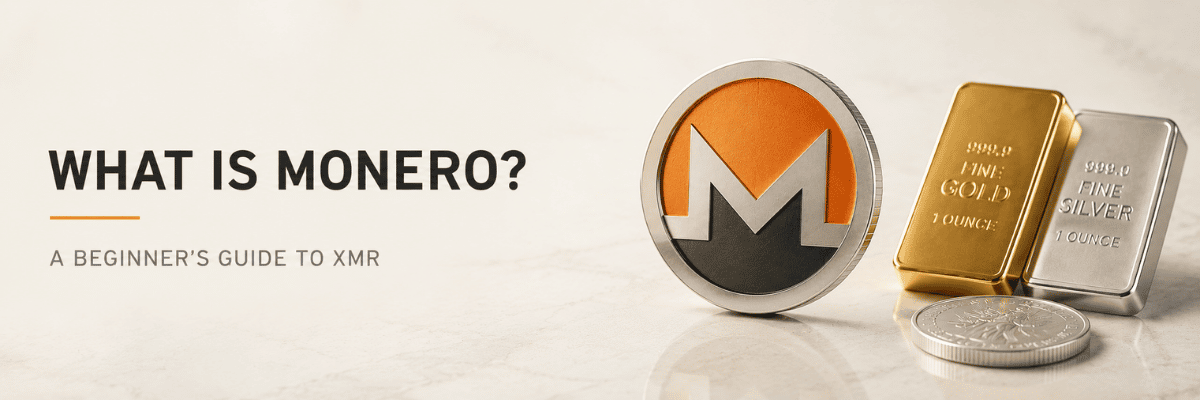
What Is Monero? Monero, also called XMR, is a privacy-focused cryptocurrency designed to hide the sender, receiver, and transaction amount by default. Unlike Bitcoin, where transactions are publicly visible on the blockchain, Monero is built for more confidential digital payments. For precious metals buyers, XMR appeals to the same values behind gold and silver ownership: privacy, self-custody, and financial independence.
Monero is a cryptocurrency built around one central idea: financial privacy. While many people think all cryptocurrencies are anonymous, most major blockchains are actually transparent. Bitcoin, for example, does not show your legal name on-chain, but it does show wallet addresses, transaction amounts, and transaction history that can often be analyzed by outside observers.
Monero takes a different approach. Instead of making transaction history public by default, Monero is designed to hide key transaction details, including the sender, recipient, and amount. The official Monero project describes XMR as a cryptocurrency focused on private and censorship-resistant transactions, especially compared with transparent blockchains like Bitcoin and Ethereum.
For people who value financial discretion, Monero has become one of the best-known privacy-focused cryptocurrencies. It is often discussed by users who want stronger payment privacy, better fungibility, and less exposure of their personal financial activity. However, Monero also comes with trade-offs, including reduced exchange availability, regulatory scrutiny, and a learning curve for new users.
This guide explains what Monero is, how it works, why people use it, and what to consider before using XMR for payments, including precious metals purchases.
Monero, also known by its ticker symbol XMR, is a decentralized cryptocurrency launched in 2014. It was created to function as private digital cash. Like Bitcoin, Monero can be sent peer-to-peer without a bank or payment processor. However, unlike Bitcoin, Monero uses privacy technology by default.
That distinction matters. On Bitcoin’s blockchain, transactions are public. Anyone can view wallet addresses, transaction amounts, and historical movement of funds. The addresses are pseudonymous, not fully anonymous. If a wallet address becomes linked to a real person, business, exchange account, shipping record, or invoice, that person’s transaction history may become easier to analyze.
Monero was designed to reduce that problem. Its privacy features aim to make transactions confidential and harder to trace. Monero does this automatically, not through an optional privacy mode. In other words, privacy is not an add-on feature. It is part of how the network works.
Monero was created because many early cryptocurrency users realized that transparent blockchains did not provide the level of privacy people expected from digital cash. A public blockchain can be useful for verification, but it can also expose sensitive financial information.
For example, a transparent blockchain may reveal:
Monero’s goal is to make cryptocurrency transactions more like cash. When you hand someone a $100 bill, the public does not automatically see your balance, spending history, or future transactions. Monero tries to bring that style of privacy into digital payments.
Monero uses several privacy technologies together. The three most important are ring signatures, stealth addresses, and RingCT, also known as Ring Confidential Transactions. These systems work together to obscure the sender, recipient, and amount of a transaction. Monero education resources commonly describe these as the core privacy layers behind XMR transactions.
Ring signatures help hide which user actually sent a transaction. Instead of making it obvious which output is being spent, Monero groups the real transaction with decoy outputs. This makes it harder for outside observers to determine which participant was the true sender.
A simple way to think about it: Monero makes the transaction look like it could have come from one of several possible sources. The network can still verify that the transaction is valid, but an outside observer cannot easily isolate the real sender.
Stealth addresses help protect the recipient. Instead of publishing a recipient’s main wallet address on-chain every time they receive funds, Monero creates a one-time address for each transaction.
This means someone looking at the blockchain cannot simply search a public address and see every payment that person or business has received. For merchants, investors, and privacy-conscious users, this is one of Monero’s most important features.
RingCT hides the amount being sent. On transparent blockchains, payment amounts are usually visible. That can create privacy issues for both buyers and sellers. For example, if someone can see the exact value of a purchase, they may infer what was bought, how wealthy the buyer is, or how much volume a business is doing.
With Monero, transaction amounts are concealed while still allowing the network to verify that the transaction follows the rules. Monero-focused privacy explainers describe RingCT as the layer that keeps amounts confidential while preserving network verification.
Monero is often called anonymous, but it is more accurate to say that it is privacy-focused and private by default. No digital system should be treated as magic anonymity. User behavior, wallet setup, exchange records, device security, malware, shipping information, and communication habits can all affect privacy.
Monero provides strong on-chain privacy compared with transparent blockchains. However, privacy also depends on how the user handles the entire transaction process. For example, if someone buys XMR from a regulated exchange using their legal identity, that exchange may have a record of the purchase. If they later provide personal information to a merchant, that off-chain information may also exist outside the Monero blockchain.
The important point is this: Monero can reduce public blockchain exposure, but it does not eliminate every privacy consideration.
Bitcoin and Monero are both decentralized cryptocurrencies, but they serve different priorities.
Bitcoin is the largest and most widely recognized cryptocurrency. It has deep liquidity, broad exchange support, strong brand recognition, and a fixed supply cap. However, Bitcoin’s blockchain is transparent. Anyone can view transactions and wallet activity, even if they do not know who owns a specific address.
Monero focuses more heavily on transaction privacy. Its blockchain does not publicly reveal the sender, recipient, or amount in the same way Bitcoin does. That makes Monero more private for payments, but it also means XMR faces more regulatory pressure and is not listed everywhere.
People use Monero for several reasons, and not all of them are complicated. Many users simply do not want their personal financial activity permanently visible to the public.
Monero’s privacy features are powerful, but they come with trade-offs.
Because Monero is a privacy coin, some exchanges have delisted it or restricted access in certain regions. That can make XMR less convenient to buy, sell, or trade than Bitcoin or Ethereum.
Privacy coins attract regulatory scrutiny because they make transaction monitoring more difficult. Monero itself is not automatically illegal in the United States, but availability and compliance treatment can vary by platform and jurisdiction. Users should understand their local laws and tax obligations.
Privacy-focused tools often require better operational habits. Users should understand wallet backups, transaction confirmation, address handling, and device security before using XMR for meaningful amounts.
Monero is accepted by fewer merchants than Bitcoin, stablecoins, or major card networks. That said, XMR remains popular among privacy-conscious crypto users and select businesses that serve that audience.
Yes, some precious metals dealers accept Monero. Veldt accepts XMR along with several other cryptocurrencies, including BTC, LTC, ETH, DOGE, USDT, USDC, XRP, and others.
For buyers who already hold Monero, using XMR to buy gold or silver can be appealing because it connects two privacy-conscious assets: private digital cash and physical precious metals. However, buyers should understand that a purchase from a business may still involve normal order records, shipping details, compliance obligations, and tax considerations.
In other words, Monero can improve blockchain-level privacy, but it does not make a commercial transaction invisible. Responsible dealers still need to follow applicable laws, verify orders, prevent fraud, and maintain appropriate business records.
There is a natural overlap between some Monero users and precious metals buyers. Both groups often care about self-custody, independence, and reducing reliance on centralized financial systems.
Gold and silver have been used as stores of value for thousands of years. Monero is a modern digital tool designed for private peer-to-peer payments. They are very different assets, but they appeal to some of the same instincts: control, discretion, and financial resilience.
A Monero holder might buy precious metals to:
This does not mean Monero and gold serve the same purpose. They do not. Monero is designed for private digital transactions. Gold and silver are physical stores of value. For some buyers, the combination can make sense as part of a broader self-custody strategy.
If you use Monero, wallet security matters. Basic best practices include:
Use a reputable Monero wallet. Back up your seed phrase offline. Never share your seed phrase or private keys. Keep your device secure. Test small transactions before moving larger amounts. Be careful with phishing websites and fake wallet downloads.
For larger holdings, consider whether you need a dedicated device, stronger backup procedures, or a more formal custody plan. Privacy does not help much if the wallet itself is compromised.
Monero is a privacy-focused cryptocurrency designed to make digital transactions more confidential. Unlike Bitcoin, where wallet activity and transaction amounts are publicly visible, Monero hides the sender, recipient, and amount by default.
That makes XMR one of the most important privacy coins in the crypto market. It appeals to users who value financial discretion, self-custody, and private payments. However, it also comes with trade-offs, including regulatory scrutiny, fewer exchange listings, and greater responsibility for the user.
For precious metals buyers, Monero can be a useful payment option when converting digital wealth into physical gold or silver. It fits naturally with a self-custody mindset, but users should still understand the practical, tax, and compliance realities of any purchase.
Monero is not just “anonymous crypto.” It is a privacy-first digital cash system built for people who believe financial privacy matters.
Monero is a cryptocurrency focused on privacy, decentralization, and scalability. Unlike Bitcoin, it obscures sender and receiver identities, making transactions untraceable. Monero uses advanced cryptographic techniques to enhance security and anonymity for users.
XMR is the ticker symbol for Monero, similar to how BTC is the ticker symbol for Bitcoin.
Yes, Monero is more private than Bitcoin. Monero uses advanced cryptographic techniques to provide enhanced privacy features, making transactions confidential and untraceable, while Bitcoin transactions are publicly recorded on a blockchain.
Monero is designed to make tracing significantly more difficult than on transparent blockchains. However, no privacy system should be treated as perfect. User behavior, exchange records, device security, and off-chain information can still affect privacy.
Yes, Veldt accepts XMR for customers who want to use crypto to buy gold or silver, subject to normal order, compliance, and fulfillment requirements.
Learn which silver dime years to look for, why 1964 and earlier U.S. dimes matter, and how old silver dimes can be worth more than

A practical case study on how a crypto trader could use precious metals to preserve gains, reduce volatility exposure, and build long-term wealth outside digital
Learn how to store silver coins and bullion safely, including tips for handling, organizing, documenting, and protecting silver at home or in secure storage.

Compare silver bars and silver coins so you can understand premiums, storage, resale, liquidity, and which silver option may fit your buying goals.
Now that you understand more about precious metals, Veldt can help you take the next step. Buy gold and silver online, use supported cryptocurrencies at secure checkout, or contact us for local help choosing the right bullion for your goals.
|
Gold: 4,459.25 | Silver: 74.25 | Platinum: 1,918.84 | Palladium: 1,361.11
|