
Silver Dimes Years: What Year Dimes Are Silver?
Learn which silver dime years to look for, why 1964 and earlier U.S. dimes matter, and how old silver dimes can be worth more than
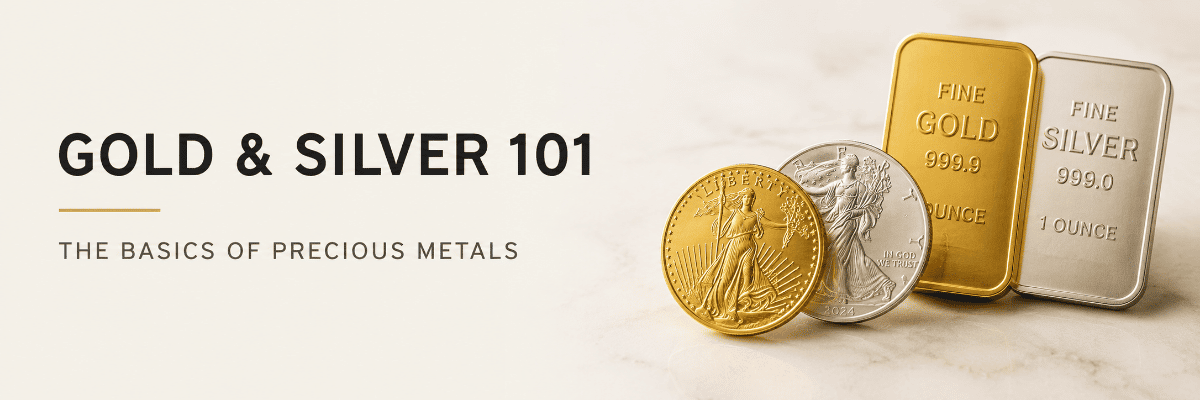
What Should Beginners Know About Gold And Silver? Gold and silver are physical precious metals used to store wealth, diversify savings, and protect purchasing power over time. Gold is better for compact long-term wealth storage, while silver is more affordable for beginners and easier to accumulate in smaller purchases. Before buying, learn how spot price, premiums, bullion coins, bars, rounds, and secure storage work so you can make a confident first purchase.
Gold and silver have been trusted stores of value for thousands of years. While currencies, banks, and financial markets change over time, physical precious metals remain tangible assets that people can hold directly. This Gold And Silver 101 guide explains the basics for new buyers who want to understand what they are buying, how pricing works, and how to avoid common mistakes.
For many people, buying precious metals is not about getting rich overnight. Instead, it is about preserving purchasing power, diversifying savings, and owning something outside the digital financial system. Gold and silver can also appeal to people who want a bridge between modern assets, such as cryptocurrency, and physical wealth they can hold in their hands.
Gold and silver are both precious metals, but they serve slightly different purposes. Gold is widely viewed as a high-value store of wealth. It is compact, globally recognized, and commonly used by investors, central banks, and private buyers who want long-term protection against currency weakness or financial uncertainty.
Silver is also a monetary metal, but it has more industrial use. It appears in electronics, solar panels, medical applications, and many other products. Because silver costs much less per ounce than gold, it is often more accessible for beginners. A new buyer can start with a few silver rounds or coins without committing thousands of dollars.
Both metals can play a role in a well-rounded precious metals strategy. Gold is better for storing larger value in less space. Silver is useful for smaller purchases, gradual accumulation, and buyers who want more ounces for the same dollar amount.
People buy physical gold and silver for several reasons. The most common reason is wealth preservation. Precious metals do not depend on the promise of a bank, company, or government in the same way that cash, stocks, bonds, or digital balances do.
Gold and silver may also help diversify a portfolio. When inflation rises, currencies weaken, or markets become unstable, many investors look for assets with long histories of trust. Physical metals are not guaranteed to rise in every crisis, but they can provide a sense of control because you own the asset directly.
Another reason is privacy and independence. Precious metals are portable, durable, and widely recognized. For buyers who already hold Bitcoin or other cryptocurrencies, metals can offer a physical counterpart to digital assets. That is why some investors choose to buy gold and silver with crypto when they want to convert part of their digital wealth into tangible bullion.
The best choice depends on your goals. Gold is usually better when you want to store a larger amount of value efficiently. A single one-ounce gold coin can represent thousands of dollars in a small, easy-to-store form. Gold also tends to have lower storage demands because it takes up less space than silver for the same dollar value.
Silver is often better for beginners who want a lower entry point. It allows buyers to make smaller purchases, learn how bullion works, and build a position gradually. However, silver can become bulky as holdings grow. A few hundred dollars in silver is easy to store, but a large silver position may require more planning.
Many buyers eventually hold both. A simple approach is to use gold for compact long-term wealth storage and silver for affordability, flexibility, and ounce accumulation.
Bullion refers to precious metals valued primarily for their metal content rather than rarity or collectibility. Common bullion products include coins, bars, and rounds.
Government-minted coins, such as American Eagles or Canadian Maple Leafs, are popular because they are recognizable and widely traded. Private mint bars and rounds can also be excellent choices, especially when they carry lower premiums. Bars are often available in many sizes, from small fractional gold bars to larger silver bars.
Beginners should usually focus on recognizable bullion rather than rare or collectible coins. Collectible coins can be legitimate, but they require more specialized knowledge. If your goal is simple precious metals ownership, bullion is usually the cleaner starting point.
The spot price is the live market price of gold or silver before dealer premiums, product costs, shipping, taxes, or other expenses. When people search for the price of gold or silver, they are usually looking at the spot price.
However, buyers almost never purchase physical metal at spot. A finished coin, bar, or round costs money to mint, distribute, insure, store, and sell. That extra cost is called the premium.
For example, if silver spot is $30 per ounce and a one-ounce silver coin sells for $35, the $5 difference is the premium. Premiums change based on demand, supply, product type, mint, and market conditions. Popular coins often carry higher premiums than generic rounds or bars.
Premiums are one of the most important concepts in this Gold And Silver 101 guide. A lower premium usually means you are getting more metal for your money. However, the cheapest product is not always the best product. Recognizability, condition, liquidity, and trust also matter.
Government coins often cost more because buyers trust them and dealers can resell them easily. Generic rounds and bars may offer lower premiums, which can make them attractive for buyers focused on maximum ounces. Larger bars sometimes have better pricing per ounce, but they may be less flexible when it is time to sell.
A smart buyer compares both the total price and the premium over spot. The goal is not just to buy cheap. The goal is to buy products that are fairly priced, authentic, liquid, and aligned with your purpose.
Coins are minted by governments and usually carry a legal tender face value, even though their metal value is much higher. Examples include the American Gold Eagle, American Silver Eagle, Canadian Maple Leaf, and South African Krugerrand.
Rounds look like coins but are produced by private mints. They do not carry legal tender status. Many silver rounds are popular because they offer a simple way to buy one ounce of silver at a lower premium than many government coins.
Bars are rectangular bullion products made by government or private mints. They are popular for efficient stacking and storage. Silver bars often come in one-ounce, five-ounce, ten-ounce, kilo, and 100-ounce sizes. Gold bars can range from tiny fractional pieces to larger investment-grade bars.
A beginner should start with a clear purpose. Are you buying for long-term savings, emergency diversification, crypto profit-taking, or gradual accumulation? Your goal should guide the product type and budget.
For many first-time buyers, the best starting point is recognizable, liquid bullion. That might include one-ounce silver coins, silver rounds, ten-ounce silver bars, fractional gold, or one-ounce gold coins and bars. Start with products you understand before moving into collectible coins, obscure mint products, or large bars.
It is also smart to buy from a dealer that clearly explains pricing, authenticity, shipping, and payment options. At Veldt, buyers can shop online, arrange local service in San Diego, and use secure crypto checkout for supported cryptocurrencies.
Storage matters because physical metals are bearer assets. Whoever controls the metal controls the value. For smaller holdings, some buyers use a quality home safe in a discreet location. Larger holdings may require a private vault, insured depository, or a split-storage approach.
Avoid discussing your holdings casually. Keep receipts and records in a secure place. Also, consider how your family or trusted representative would access your metals in an emergency. Good storage is not only about theft prevention. It is also about organization, documentation, and long-term planning.
The first mistake is assuming that spot price is the final price. Physical products include premiums, and those premiums vary.
The second mistake is buying collectible coins without understanding the numismatic market. Some rare coins are valuable, but beginners can easily overpay if they do not know how grading, rarity, and dealer spreads work.
The third mistake is ignoring liquidity. Recognizable bullion is usually easier to resell than obscure products. Buyers should think about the exit before they buy.
Finally, do not treat physical metals like a short-term trading app. Gold and silver can move in price, but physical bullion is usually best approached as long-term savings and diversification.
Gold and silver are simple in concept but worth understanding before you buy. Learn the difference between gold and silver, know how spot price and premiums work, and start with recognizable bullion that fits your goals.
For beginners, the best strategy is usually steady, informed accumulation. Focus on authenticity, liquidity, fair pricing, and secure storage. Whether you are buying with dollars or crypto, physical precious metals can give you a tangible foundation for long-term wealth preservation.
Gold is generally considered better for beginners due to its stability and historical value as a safe-haven asset.
No, you typically cannot buy gold and silver at spot price. Dealers usually charge a premium above the spot price for physical bullion.
The best first silver purchase is typically a combination of American Silver Eagles and generic silver bullion rounds. These options offer liquidity, recognition, and ease of resale.
The best first gold purchase is typically a gold bullion coin, such as the American Gold Eagle or Canadian Gold Maple Leaf, or gold bars from reputable mints. These options provide a combination of liquidity, recognizability, and ease of purchase.
Yes, Veldt allows customers to buy gold and silver with crypto through secure crypto checkout, including Bitcoin and other supported cryptocurrencies.
Learn which silver dime years to look for, why 1964 and earlier U.S. dimes matter, and how old silver dimes can be worth more than

A practical case study on how a crypto trader could use precious metals to preserve gains, reduce volatility exposure, and build long-term wealth outside digital
Learn how to store silver coins and bullion safely, including tips for handling, organizing, documenting, and protecting silver at home or in secure storage.
Compare silver bars and silver coins so you can understand premiums, storage, resale, liquidity, and which silver option may fit your buying goals.
Now that you understand more about precious metals, Veldt can help you take the next step. Buy gold and silver online, use supported cryptocurrencies at secure checkout, or contact us for local help choosing the right bullion for your goals.
|
Gold: 4,343.75 | Silver: 67.79 | Platinum: 1,775.28 | Palladium: 1,229.81
|