

Silver Dimes Years: What Year Dimes Are Silver?
Learn which silver dime years to look for, why 1964 and earlier U.S. dimes matter, and how old silver dimes can be worth more than
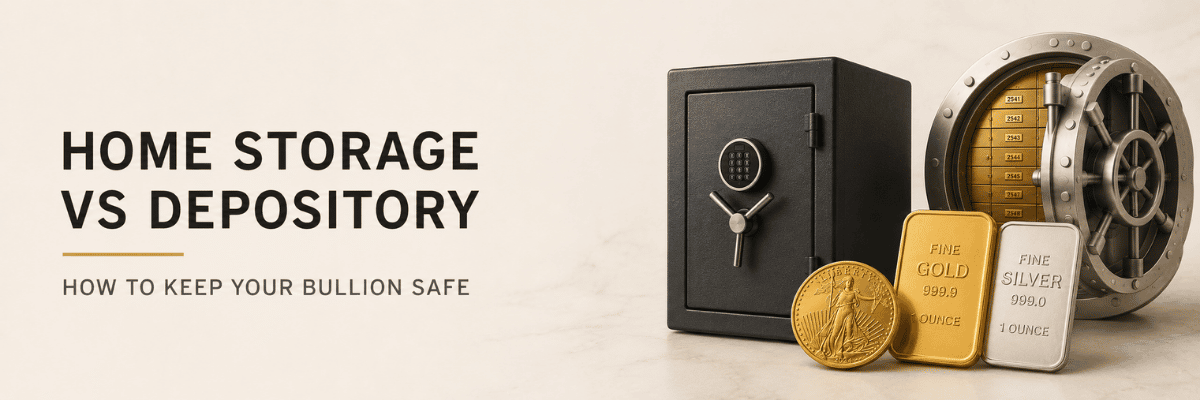
Should You Store Bullion At Home Or In A Depository? For most bullion owners, the best choice between home storage vs depository depends on the size of the stack and how much access you need. Home storage works best for smaller amounts of gold and silver you want to access quickly, while depository storage is usually better for larger holdings that need professional vault security, insurance options, and formal inventory records. Many buyers use a blended strategy: keep a modest amount of bullion at home for immediate access, then store the larger core position in a reputable depository. This reduces single-location risk while preserving both control and institutional-grade security.
Gold and silver have been trusted stores of value for thousands of years. While currencies, banks, and financial markets change over time, physical precious metals remain tangible assets that people can hold directly. This Gold And Silver 101 guide explains the basics for new buyers who want to understand what they are buying, how pricing works, and how to avoid common mistakes.
For many people, buying precious metals is not about getting rich overnight. Instead, it is about preserving purchasing power, diversifying savings, and owning something outside the digital financial system. Gold and silver can also appeal to people who want a bridge between modern assets, such as cryptocurrency, and physical wealth they can hold in their hands.
Home storage usually appeals to people who want maximum control. You know where your metals are, you can access them anytime, and you do not need to rely on a third party. However, that control also means you are responsible for security, discretion, insurance, and safe handling.
Depository storage appeals to people who want professional security and cleaner logistics. A reputable depository may offer vault controls, insurance options, inventory statements, audits, and shipping support. The trade-off is that you give up immediate physical access and pay ongoing storage fees.
A simple way to think about it is this: home storage is about control and access; depository storage is about scale and institutional security.
Home storage can work well if you hold a modest amount of bullion, want immediate access, and are disciplined about operational security. It is especially useful for what some stackers call “working metal”—the portion of your gold or silver you want close at hand.
For home storage, the biggest mistake is relying on a cheap safe, an obvious hiding place, or loose secrecy. A basic fire safe from a big-box store may protect documents from heat, but it is not the same thing as a burglary-rated safe. If you plan to keep meaningful value at home, look at serious safe ratings such as TL-15 or TL-30, and make sure the safe is properly anchored. TL-rated safes are designed around tool-resistance testing, and higher ratings generally indicate stronger burglary resistance.
Your home setup should also include layers. That may mean cameras, lighting, reinforced doors, alarm systems, and careful delivery habits. Do not leave packaging in visible trash. Do not talk casually about your holdings. Do not post photos of your stack online. The best safe in the world becomes less useful if too many people know what is inside it.
The main benefit of home storage is control. The main risk is also control.
If something goes wrong, the responsibility usually falls on you. Homeowner policies may have strict limits or exclusions for bullion, coins, cash, and other valuables. You should never assume your metals are fully covered just because you have homeowner or renter insurance. Confirm the details with your insurer and consider a specialty policy if needed.
You should also think about concentration risk. Keeping your entire stack in one place may feel simple, but it can create a single point of failure. As your holdings grow, consider splitting storage across multiple secure locations or moving your core position to a professional vault.
Depository storage often makes sense once your bullion reaches a value where home storage feels stressful, impractical, or difficult to insure. It can also make sense if you travel often, live in a high-risk area, or want cleaner documentation for estate planning, business records, or future resale.
A depository may offer allocated or segregated storage. These terms matter. Allocated storage generally means specific metal is assigned to you. Segregated storage usually means your metals are stored separately from other clients’ metals. Commingled storage may be less expensive, but you may not receive the exact same bars or coins back when you withdraw. Always read the storage agreement carefully.
Before choosing a depository, ask about insurance limits, audit procedures, withdrawal timelines, shipping fees, account minimums, and whether you can receive inventory statements. Also ask how they handle data privacy and what happens if you want to sell or transfer metals later.
A bank safe-deposit box can feel like a middle ground, but it has limitations. The FDIC explains that a safe-deposit box is storage space, not a deposit account, and its contents are not protected by FDIC deposit insurance if they are damaged or stolen. Financial institutions also generally do not insure the contents of safe-deposit boxes.
That does not mean safe-deposit boxes are useless. They can work for documents, backups, or smaller valuables. However, for bullion, you need to understand the access limits, insurance gap, bank hours, and estate complications. A safe-deposit box is not the same as a professional bullion depository.
If you store gold bought with Bitcoin, privacy should be part of your storage plan from the beginning. The goal is not paranoia. The goal is reducing unnecessary exposure.
Use good wallet hygiene, avoid address reuse when practical, keep receipts and records organized, and avoid linking your public identity to specific purchases. If you are buying metals with crypto, review Wallet Hygiene & Privacy For Purchases and Choosing A Wallet For Purchases.
For larger orders, direct-to-depository shipping may reduce handling at home. For smaller orders, plain, unbranded packaging and careful receiving habits may be enough. Either way, your privacy habits should match the value of the metals you are protecting.
If you are considering a precious metals IRA, be very careful with “home storage IRA” claims. The IRS states that IRA-owned bullion must meet specific rules, including physical possession by a bank or approved non-bank trustee for certain bullion exceptions. If a retirement account improperly acquires collectibles, the amount can be treated as a distribution and may be taxable.
This is not tax advice. Speak with a qualified tax professional before making IRA storage decisions.
For many buyers, the best answer is not all-or-nothing. A blended strategy often works best.
You might keep a small amount of gold or silver at home for immediate access while storing the larger core position in a depository. This gives you control without concentrating your entire stack in one location. It can also make future selling easier, especially if the depository can ship directly to a buyer, dealer, or another vault.
Home storage works best for smaller holdings, immediate access, and people who take security seriously. Depository storage works best for larger holdings, professional security, cleaner insurance options, and easier logistics.
Before choosing, compare your stack size, home security, insurance coverage, access needs, privacy goals, and long-term exit plan. The safest approach is usually the one that matches your real behavior—not the one that only sounds good in theory.
For many Veldt clients, the practical answer is simple: keep a modest amount nearby, store the core position professionally, and review the plan as your holdings grow.
Depository storage is usually safer for larger bullion holdings because it offers professional vault security, insurance options, and formal controls. Home storage can still work well for smaller holdings if you use a serious safe, strong OPSEC, and proper insurance.
No. The FDIC says safe-deposit box contents are not insured by FDIC deposit insurance because a box is storage space, not a deposit account.
You can, but privacy and delivery habits matter. For larger crypto-to-bullion purchases, consider direct-to-depository shipping or a blended storage setup.
Be very cautious. IRS rules generally require IRA-owned bullion to be held by a bank or approved non-bank trustee to qualify for the bullion exception. Speak with a tax professional before relying on any home storage IRA arrangement.
Learn which silver dime years to look for, why 1964 and earlier U.S. dimes matter, and how old silver dimes can be worth more than

A practical case study on how a crypto trader could use precious metals to preserve gains, reduce volatility exposure, and build long-term wealth outside digital
Learn how to store silver coins and bullion safely, including tips for handling, organizing, documenting, and protecting silver at home or in secure storage.

Compare silver bars and silver coins so you can understand premiums, storage, resale, liquidity, and which silver option may fit your buying goals.
Now that you understand more about precious metals, Veldt can help you take the next step. Buy gold and silver online, use supported cryptocurrencies at secure checkout, or contact us for local help choosing the right bullion for your goals.
|
Gold: 4,314.16 | Silver: 67.65 | Platinum: 1,773.47 | Palladium: 1,231.37
|