
Silver Dimes Years: What Year Dimes Are Silver?
Learn which silver dime years to look for, why 1964 and earlier U.S. dimes matter, and how old silver dimes can be worth more than
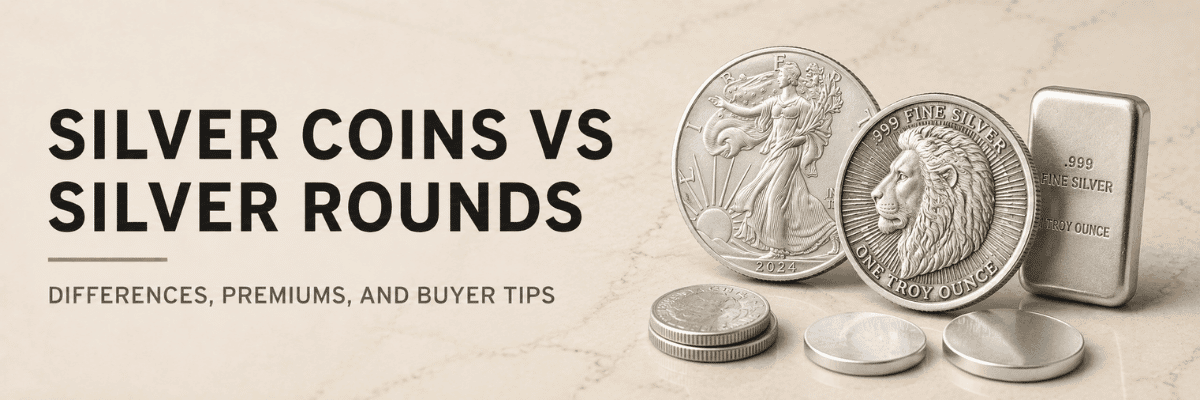
Silver coins are usually issued by government mints and may carry legal tender face value, while silver rounds are typically produced by private mints and valued mainly for their silver content. Coins often offer stronger recognition, while rounds may offer lower premiums.
Silver buyers often hear the words “coin” and “round” used almost interchangeably. At first glance, the two can look similar. Both are circular, both can contain one troy ounce of silver, and both may feature detailed designs. However, silver coins vs silver rounds is an important comparison because the difference affects premiums, recognition, resale, and how each product fits into a silver strategy.
The simplest distinction is this: silver coins are usually issued by government mints and may carry legal tender face value, while silver rounds are usually made by private mints and do not carry legal tender status. Both can be legitimate ways to own silver, but buyers should understand what they are paying for before choosing one over the other.
This guide explains how silver coins and silver rounds differ, why premiums vary, which option may be easier to resell, and how beginners can decide what makes sense for their first or next silver purchase.
A silver coin is typically issued by a government mint. Many modern silver bullion coins contain a stated amount of silver, such as one troy ounce, and also carry a legal tender face value. That face value is usually symbolic because the silver content is worth much more than the number stamped on the coin.
Common examples include American Silver Eagles, Canadian Silver Maple Leafs, Austrian Silver Philharmonics, and other official mint bullion coins. These products are popular because buyers recognize them quickly. The design, mint, purity, and government backing can all add trust.
That recognition often comes with a higher premium. A buyer may pay more over spot for a government silver coin than for a private mint round. The higher price may still be reasonable if the buyer values liquidity, trust, and easier resale.
A silver round is a privately minted silver product that looks coin-like but is not legal tender. Most popular silver rounds are made in one-ounce sizes and are valued mainly for their silver content. Many rounds are marked with weight and purity, such as “1 troy ounce” and “.999 fine silver.”
Rounds can be simple, decorative, historical, patriotic, artistic, or privately branded. Some are made by well-known private mints, while others are more generic. As a result, recognizability can vary from one round to another.
The main advantage of rounds is often price. Since private mint rounds do not carry the same official mint status as government coins, they may have lower premiums. That can make them attractive for buyers who want to build silver ounces efficiently.
The main difference between silver coins and silver rounds is who issues them. Silver coins are generally issued by government mints. Silver rounds are generally issued by private mints.
That difference leads to other differences. Coins may carry legal tender face value, stronger global recognition, and higher premiums. Rounds usually do not have legal tender status, but they may offer a lower-cost way to buy silver by weight.
For many buyers, the choice comes down to priority. If you want recognition and trust, coins may be more appealing. If you want more ounces for your money, rounds may be worth comparing first.
Many government silver coins carry a legal tender face value. For example, a one-ounce silver bullion coin may have a face value that is far below the value of the silver inside it. That face value does not mean you should spend the coin like ordinary change.
The face value mainly reflects the coin’s official status as a government-issued coin. The market value usually comes from silver content, demand, condition, and premium. In practical terms, buyers treat these products as bullion, not as spending money.
Silver rounds do not have legal tender face value. That does not make them fake or inferior. It simply means they are privately minted silver products. A reputable round can still be a perfectly legitimate way to own physical silver.
Premium is the amount you pay above the silver’s spot-based metal value. Government silver coins often carry higher premiums because of mint reputation, demand, packaging, production cost, and recognizability.
Private mint rounds often have lower premiums because they are more straightforward bullion products. They may not have the same official status, but they can still contain the same amount of silver as a comparable one-ounce coin.
That is why premium comparison matters. If two products both contain one troy ounce of .999 fine silver, the lower-premium product gives you more silver value for each dollar spent. However, the higher-premium product may offer easier recognition and resale. The best choice depends on whether you prioritize cost or liquidity.
Recognition is one of the strongest arguments for silver coins. A widely known government coin can be easier for buyers, dealers, and collectors to identify. That can reduce friction when it is time to sell.
Silver rounds vary more. Some private mint rounds are well known and easy to sell. Others are more obscure. A round from a recognized private mint may be very liquid, while an unknown novelty round may require more explanation.
Beginners should avoid assuming all rounds are equal. If you choose rounds, focus on clear weight, clear purity, reputable minting, and clean condition. The goal is to buy silver that another buyer can understand quickly later.
Government silver coins are often easier to sell because they are widely recognized. Many dealers publish clear buy and sell prices for popular bullion coins. Private buyers may also feel more comfortable with familiar government-minted products.
Silver rounds can also be easy to sell, especially when they come from a reputable mint and are marked clearly. However, generic or unusual rounds may not command the same resale confidence as well-known coins.
That does not automatically make coins better. If you paid a much higher premium for the coin, you still need to consider whether you will recover that premium when selling. Liquidity matters, but so does the price you paid upfront.
Silver rounds are often easier for beginners who want simple ounce-based buying. A one-ounce round teaches the relationship between silver spot price, premium, and final product price. It is a clean way to learn without paying the highest premiums in the market.
Government silver coins may be better for beginners who value confidence and recognizability. If a buyer feels more comfortable starting with an American Silver Eagle or another well-known official coin, that comfort has value.
A balanced first purchase can include both. One recognized government coin and a few lower-premium rounds can teach the difference quickly. You can compare how they look, how they are priced, and how premiums vary between official mint products and private mint products.
Silver rounds often win when the goal is lower premiums. Since they are made by private mints and usually valued mainly for silver content, rounds can be priced more competitively than many government coins.
That can make rounds attractive for buyers who want to stack ounces over time. If your main goal is silver accumulation, saving a few dollars per ounce can matter over many purchases.
Still, do not buy only because something is cheap. Make sure the round is marked clearly, made by a reputable source, and easy enough to resell. Low premium should not come at the cost of confusion or distrust later.
For long-term holding, both coins and rounds can work. The better choice depends on your storage habits and exit plan. If you want products that are easy to recognize decades later, government coins have an advantage. If you want more ounces for your budget, rounds may have the edge.
Storage is similar for both. One-ounce coins and rounds can be stored in tubes, capsules, or labeled containers. Keep them dry, avoid unnecessary handling, and document what you own.
For larger positions, organization becomes more important. Separate coins from rounds, label quantities, and keep purchase records. This helps you track cost basis, compare future offers, and make better selling decisions if needed.
The first mistake is assuming coins and rounds are the same because they are both circular. They may contain the same silver weight, but official mint status and private mint status can affect pricing and resale.
The second mistake is ignoring premiums. A buyer may love a government coin but overpay if they do not compare the premium. Another buyer may chase the cheapest round but choose something obscure that is harder to sell.
The third mistake is buying novelty pieces without understanding the market. Decorative rounds can be fun, but if your goal is silver accumulation, focus first on products with clear weight, purity, and resale demand.
The difference between silver coins vs silver rounds comes down to issuer, legal tender status, recognition, and premium. Government silver coins usually offer stronger recognition and official mint backing. Silver rounds usually offer simpler ounce-based pricing and may carry lower premiums.
Neither option is automatically better. Coins may fit buyers who value trust and resale confidence. Rounds may fit buyers who want to build silver ounces efficiently. Many silver buyers hold both because each product serves a different purpose.
At Veldt, customers can buy silver, gold, platinum, and palladium online with secure checkout, including supported cryptocurrencies. Whether you prefer silver coins, rounds, bars, or junk silver, the goal is to understand what you are buying and choose products that fit your long-term plan.
Silver coins are usually issued by government mints and may carry legal tender face value, while silver rounds are usually made by private mints and valued mainly for silver content.
Yes, reputable silver rounds are real silver when they are properly marked and sourced from trustworthy dealers or mints. Many popular rounds contain one troy ounce of .999 fine silver.
Silver coins may be better for recognition and resale confidence, while silver rounds may be better for lower premiums and simple ounce accumulation. The better choice depends on your goals.
Silver coins often cost more because they are issued by government mints, carry official status, and are widely recognized. That added trust and demand can increase premiums over spot.
Beginners can buy either. Silver rounds are often simpler for learning price and premium basics, while government silver coins may offer more recognition. Many buyers start with a small mix of both.
Learn which silver dime years to look for, why 1964 and earlier U.S. dimes matter, and how old silver dimes can be worth more than

A practical case study on how a crypto trader could use precious metals to preserve gains, reduce volatility exposure, and build long-term wealth outside digital
Learn how to store silver coins and bullion safely, including tips for handling, organizing, documenting, and protecting silver at home or in secure storage.
Compare silver bars and silver coins so you can understand premiums, storage, resale, liquidity, and which silver option may fit your buying goals.
Now that you understand more about precious metals, Veldt can help you take the next step. Buy gold and silver online, use supported cryptocurrencies at secure checkout, or contact us for local help choosing the right bullion for your goals.
|
Gold: 4,487.43 | Silver: 75.12 | Platinum: 1,934.27 | Palladium: 1,371.72
|