
Silver Dimes Years: What Year Dimes Are Silver?
Learn which silver dime years to look for, why 1964 and earlier U.S. dimes matter, and how old silver dimes can be worth more than
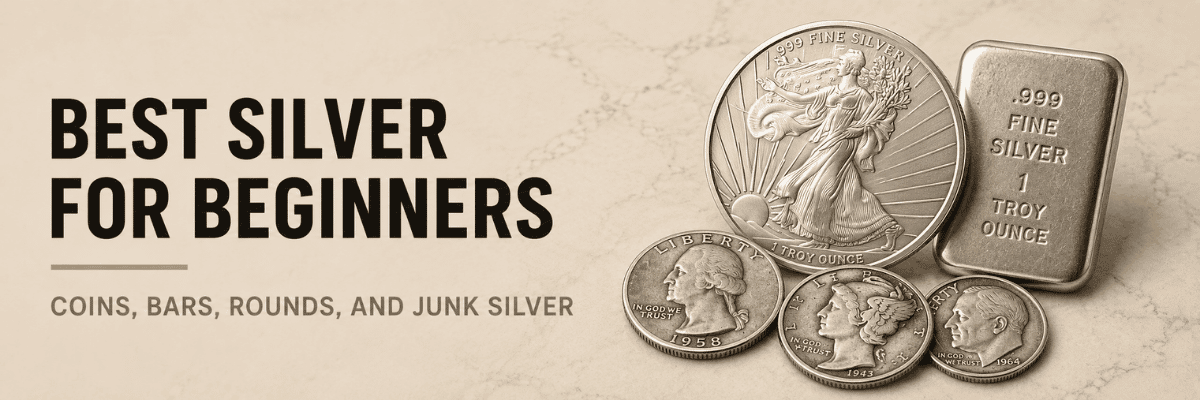
The best silver for beginners is usually recognizable, easy to price, and easy to resell. One-ounce silver rounds, common silver coins, small silver bars, and junk silver can all work, but the best choice depends on your budget, storage plans, and whether you value low premiums, recognizability, or fractional silver.
Your first silver purchase should be simple enough to understand without needing a coin encyclopedia, a spreadsheet, or a dealer whispering jargon across the counter. The best silver for beginners is usually recognizable, fairly priced, easy to store, and easy to sell later if your plans change.
That does not mean every beginner should buy the same thing. Some buyers want the lowest premium per ounce. Others want highly recognizable coins. Some like old 90% silver because it feels familiar and fractional. The right answer depends on your budget, your reason for buying, and how much effort you want to put into learning the market.
This guide compares silver coins, bars, rounds, and junk silver so you can make a cleaner first decision instead of buying whatever looks interesting in the moment.
Beginner-friendly silver should be easy to identify. You should know what it is, how much silver it contains, and why it is priced the way it is. If a product requires advanced numismatic knowledge, it may not be the best first purchase.
Good beginner silver should also be liquid. That means other buyers and dealers recognize it and understand how to price it. Popular silver rounds, common bars, government bullion coins, and widely traded junk silver usually fit that description better than obscure collectibles.
Finally, beginner silver should fit your storage plan. A few ounces of silver are easy to keep organized. A larger silver position can become bulky, especially compared with gold. Before buying heavily, think about where you will store the metal, how you will track it, and how you would sell part of it later.
Silver rounds are often one of the simplest choices for beginners. A silver round looks like a coin, but it is usually made by a private mint and does not carry legal tender face value. Most popular rounds are one troy ounce of .999 fine silver.
The biggest advantage is clarity. If you buy a one-ounce silver round, you are usually buying one ounce of silver plus the dealer premium. That makes it easier to compare products and understand how spot price affects the final price.
Rounds can be a strong starting point for buyers who want to accumulate ounces without paying the higher premiums often attached to government coins. The tradeoff is that private mint rounds may not have the same recognition as an American Silver Eagle or Canadian Silver Maple Leaf. For many beginners, though, recognized private mint rounds can be a practical first step.
Silver bars are useful when your goal is to build ounces efficiently. They are usually rectangular, easy to stack, and available in many sizes. Common beginner-friendly sizes include one-ounce, five-ounce, and ten-ounce bars.
A ten-ounce silver bar can be a good next step after you understand one-ounce products. It keeps the math simple and can be easier to store than ten loose pieces. Larger bars may sometimes offer lower premiums per ounce, but they are less flexible if you want to sell only a small amount.
For a true first purchase, smaller bars are often easier emotionally and financially. You can learn how silver pricing works, compare premiums, and get comfortable storing bullion before committing to larger bars.
Government silver coins are popular because they are widely recognized. Examples include American Silver Eagles, Canadian Silver Maple Leafs, Austrian Philharmonics, and other official mint coins. These products often carry legal tender status, even though their metal value is much higher than the face value.
The main advantage is trust. Many buyers recognize official mint coins quickly, and that can help with resale. A new buyer may also feel more comfortable starting with a well-known government coin instead of a generic product from an unfamiliar private mint.
The downside is premium. Government coins often cost more over spot than rounds or some bars. That higher premium may be worth it if you value recognizability, but beginners should understand what they are paying for. Use official sources like the U.S. Mint coin specifications to understand modern coin basics, then compare actual bullion prices before buying.
Junk silver usually refers to common older silver coins valued mainly for their metal content. In the U.S., this often means 1964 and earlier dimes, quarters, and half dollars made with 90% silver.
Junk silver can be appealing because it feels familiar. Many buyers understand old dimes and quarters more easily than bullion bars. The coins are also naturally fractional, which can make them useful if you want smaller silver pieces instead of only one-ounce or ten-ounce products.
The challenge is that junk silver requires a little more learning. You need to understand dates, face value, silver content, wear, and premiums. If you enjoy coin history, junk silver may be a great fit. If you want the simplest price comparison possible, rounds or bars may be easier.
Beginners should be careful with rare coins, heavily marketed collectibles, painted coins, novelty pieces, and products with unusually high premiums. Some collectible coins are legitimate, but they require knowledge. If your goal is simple silver ownership, start with bullion-style products before moving into numismatics.
Also avoid buying only because something looks impressive. A large bar, fancy proof coin, or limited-edition product may not be the best beginner choice if you do not understand the premium or resale market.
A good rule is simple: if you cannot explain why the product costs what it costs, pause before buying. Learn the weight, purity, premium, and likely resale path first.
The premium is the amount you pay above the silver’s spot-based metal value. Every physical silver product has some kind of premium because minting, distribution, insurance, shipping, payment processing, and dealer costs all matter.
Beginners often focus only on the lowest price, but that can be too narrow. A low premium is helpful, but recognizability and liquidity also matter. A product that is slightly cheaper upfront may not always be easier to resell later.
Before buying, compare the product price against live or published silver market references such as precious metals price data. Then compare similar products. Look at one-ounce rounds against other one-ounce rounds, silver bars against similar bars, and government coins against other government coins.
A practical first silver purchase could be a small mix of simple, recognizable products. For example, a beginner might start with a few one-ounce silver rounds, one recognized government silver coin, and a small amount of junk silver if available at a fair premium.
That type of mix teaches several lessons at once. Rounds teach weight and premium comparison. Government coins teach recognizability. Junk silver teaches face value, fractional silver, and the difference between circulating coinage and bullion.
You do not need to buy everything at once. In fact, it is often smarter to start small. Make one clean purchase, document what you bought, store it safely, and then compare your experience before buying more.
If your top priority is getting more silver for your money, silver rounds and common silver bars are often worth comparing first. These products may carry lower premiums than government coins, depending on market conditions and availability.
Generic does not automatically mean bad. A recognized private mint round or bar can be a perfectly reasonable way to own silver. The key is buying from a source that verifies authenticity and explains pricing clearly.
Still, do not chase the absolute lowest premium without thinking about resale. An obscure product may be harder to sell than a widely recognized one. A slightly higher premium can be reasonable if it buys stronger trust and easier liquidity.
If recognizability matters most, government silver coins are usually the stronger choice. American Silver Eagles, Canadian Silver Maple Leafs, and other well-known official mint coins are familiar to many buyers and dealers.
Recognizability can help when it is time to sell. A widely known coin may be easier for a dealer or private buyer to identify quickly. That does not guarantee the highest return, but it can reduce friction.
The tradeoff is cost. Highly recognized coins often carry higher premiums. Beginners should decide whether that extra cost supports their goal or whether a lower-premium round or bar is more practical.
If your budget is small, start with one-ounce products or fractional junk silver. A single one-ounce round can teach you the basics without requiring a large commitment. A few silver dimes or quarters can also be useful if you want fractional pieces.
Small purchases give you room to learn. You can compare prices, inspect the product, understand packaging, and see how you feel about storing physical metal before scaling up.
The main thing to watch is transaction cost. Very small purchases can have higher effective premiums after shipping or fees. Local pickup, in-person buying, or bundling a few items together may help reduce that issue.
For long-term storage, organization matters. Silver bars are efficient because they stack well. Rounds can be kept in tubes. Government coins often store cleanly in tubes or original mint packaging. Junk silver can be stored in labeled bags, tubes, or containers by denomination and face value.
Silver takes up more space than gold for the same dollar value, so storage becomes more important as your holdings grow. A casual drawer may work for a few ounces, but larger amounts deserve a real plan.
Keep records of what you own, where it is stored, and what you paid. Good documentation helps with resale, insurance planning, estate planning, and your own peace of mind.
The best silver for beginners is usually the silver you can understand, price, store, and resell without confusion. For many first-time buyers, that means starting with one-ounce silver rounds, small bars, recognizable government coins, or common junk silver.
There is no single perfect product. Rounds may offer simple ounce accumulation. Bars may help with storage and larger purchases. Government coins may offer recognizability. Junk silver may offer fractional silver and historical appeal. The best choice depends on your reason for buying.
At Veldt, customers can buy silver, gold, platinum, and palladium online with secure checkout, including supported cryptocurrencies. Whether you are making your first silver purchase or building a larger position over time, the goal is to choose products that are clear, authentic, fairly priced, and aligned with your long-term plan.
The best silver for beginners is usually recognizable, easy to price, and easy to resell. One-ounce silver rounds, small silver bars, government silver coins, and junk silver can all be good options depending on your goals.
Yes. Silver rounds can be good for beginners because they are often simple to compare by weight, purity, and premium. Many buyers start with one-ounce rounds to learn how silver pricing works.
Silver bars may be better for efficient storage and building ounces, while coins may offer stronger recognizability. The better choice depends on whether you value low premiums, liquidity, or convenience.
Beginners can buy junk silver if they understand silver dates, face value, and premiums. Junk silver can be useful for fractional silver, but rounds or bars may be easier for simple ounce-based pricing.
A beginner should usually start small with a purchase they understand. A few one-ounce rounds, a small bar, one recognized government coin, or a small amount of junk silver can be enough to learn the basics before buying more.
Learn which silver dime years to look for, why 1964 and earlier U.S. dimes matter, and how old silver dimes can be worth more than

A practical case study on how a crypto trader could use precious metals to preserve gains, reduce volatility exposure, and build long-term wealth outside digital
Learn how to store silver coins and bullion safely, including tips for handling, organizing, documenting, and protecting silver at home or in secure storage.
Compare silver bars and silver coins so you can understand premiums, storage, resale, liquidity, and which silver option may fit your buying goals.
Now that you understand more about precious metals, Veldt can help you take the next step. Buy gold and silver online, use supported cryptocurrencies at secure checkout, or contact us for local help choosing the right bullion for your goals.
|
Gold: 4,485.18 | Silver: 75.07 | Platinum: 1,933.55 | Palladium: 1,371.30
|