
Silver Dimes Years: What Year Dimes Are Silver?
Learn which silver dime years to look for, why 1964 and earlier U.S. dimes matter, and how old silver dimes can be worth more than
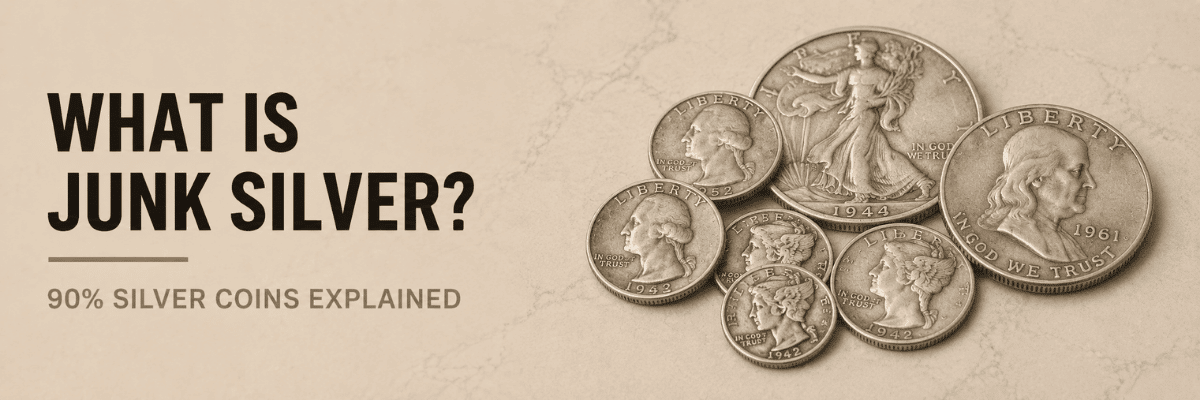
Junk silver refers to common older silver coins valued mainly for their metal content instead of rare collector value. In the U.S., this often includes 1964 and earlier dimes, quarters, and half dollars made with 90% silver.
The phrase “junk silver” sounds dismissive at first. It makes some people imagine damaged coins, low-quality metal, or something a dealer pulled from a bargain bin. In reality, junk silver is a common market term for older silver coins that are usually valued for their metal content instead of rare collector value.
For many U.S. buyers, junk silver means pre-1965 dimes, quarters, and half dollars that contain 90% silver. These coins may be worn, circulated, and common, but they are not worthless. Their value comes from the silver inside them, which is why they remain popular with stackers, collectors, and people who want recognizable fractional silver.
This guide explains what junk silver is, which coins usually fall into that category, how junk silver value works, and why these old coins still matter in the modern precious metals market.
Junk silver refers to common silver coins that are valued mainly for their precious metal content. The coins are usually not rare enough to command large collector premiums, but they still contain silver. That silver content gives them value beyond ordinary face value.
In the United States, the term often applies to 90% silver dimes, quarters, and half dollars dated 1964 and earlier. These coins were used in everyday commerce, so many examples show normal circulation wear. That wear does not erase the silver value.
The word “junk” simply separates common silver coins from rare numismatic coins. A worn 1964 silver quarter may not be a museum piece, but it still contains silver. That makes it useful for people who want physical silver in smaller, recognizable pieces.
The term exists because dealers and buyers needed a simple way to describe common circulated silver coins. These coins are usually not priced like rare collectibles. Instead, they are priced closer to their silver content, plus or minus market premiums.
That does not mean the coins are fake, damaged beyond use, or undesirable. Many buyers actively look for junk silver because it is familiar, divisible, and widely recognized. A silver dime, quarter, or half dollar can be easier for a beginner to understand than a large bullion bar.
A better way to think about junk silver is “common silver coinage.” The coins may not be rare, but they are still silver. That is the point.
The most common U.S. junk silver coins are dimes, quarters, and half dollars dated 1964 and earlier. These coins are usually 90% silver and 10% copper. The copper helped make the coins durable enough for circulation.
Common examples include Roosevelt silver dimes, Mercury dimes, Washington silver quarters, Walking Liberty half dollars, Franklin half dollars, and 1964 Kennedy half dollars. Older designs, such as Barber dimes, Barber quarters, and Barber half dollars, may also contain silver, though some examples can have more collector interest depending on date and condition.
The United States Mint explains that silver was removed from the dime and quarter in 1965. Its quarter history page also notes that the quarter changed to copper-nickel clad in 1965. You can review the official U.S. Mint dime history and U.S. Mint quarter history for the transition away from silver.
Half dollars deserve a little extra attention because their silver history is more complicated than dimes and quarters. U.S. half dollars dated 1964 and earlier are generally 90% silver. Kennedy half dollars dated 1965 through 1970 are commonly known for having a reduced silver content rather than the earlier 90% composition.
The U.S. Mint states that silver was removed from the half dollar in 1971, when the composition became copper-nickel clad. That means some half dollars dated after 1964 can still have silver content, but they are not the same as 90% silver half dollars.
For a beginner, the cleanest starting point is simple: 1964 and earlier dimes, quarters, and half dollars are the main 90% silver coins to learn first. Once you understand those, you can study 40% silver Kennedy half dollars and special issues separately.
Junk silver value usually starts with silver content. Since the coins contain silver, their base value moves with the silver market. When silver prices rise, junk silver values usually rise too. When silver prices fall, the metal-based value can fall.
Dealers and buyers often quote junk silver by face value rather than by each individual coin. For example, a group of 40 silver quarters equals $10 face value. A group of 100 silver dimes also equals $10 face value. In the junk silver market, that face value number helps buyers calculate silver content quickly.
Spot price is only part of the equation. Physical silver products usually trade with premiums and spreads. If you want a market reference before buying or selling, you can compare current silver pricing against published precious metals price data, then remember that real-world buy and sell prices may differ from spot.
Junk silver is related to bullion, but it is not exactly the same as a modern silver round or bar. Bullion usually refers to products made specifically for precious metals ownership, such as silver bars, silver rounds, and government-minted silver coins.
Junk silver started as circulating money. That gives it a different character. The coins have face value, history, and familiar designs. They may also have wear from actual use, which is why common examples are usually valued by silver content rather than perfect condition.
Both forms can belong in a silver strategy. Junk silver gives you smaller fractional pieces. Silver bars and rounds may offer cleaner weight-based comparison. Government bullion coins may offer strong recognition, though often at higher premiums.
People buy junk silver because it is simple, tangible, and familiar. A silver quarter feels different from a generic financial product. You can hold it, recognize it, and understand that the value comes from the metal inside.
Fractional size is another major reason. A single silver dime, quarter, or half dollar represents a smaller piece of silver than a large bar. That can make junk silver useful for buyers who want flexibility or smaller units.
Some buyers also like the historical side. These coins circulated before modern clad coinage became standard. They connect everyday money with precious metals in a way that newer buyers often find easy to understand.
Junk silver is not perfect. First, it can require more learning than modern bullion. You need to understand dates, denominations, silver content, face value calculations, and how premiums are quoted.
Second, condition and sorting can matter. Some coins are heavily worn. Others may have collector value that should not be ignored. If you buy or sell a mixed group, you need to know whether you are dealing with common silver coins, better-date coins, or something unusual.
Third, premiums can change. Junk silver is not always the cheapest way to buy silver. In some markets, demand rises and premiums get expensive. A careful buyer compares junk silver with silver rounds, bars, and coins instead of assuming one product is always best.
Start with the date. For U.S. dimes and quarters, 1964 and earlier is the key range most beginners should remember. Those coins are generally 90% silver. For half dollars, 1964 and earlier are also the main 90% silver examples, while some later Kennedy half dollars can have reduced silver content.
Next, check the denomination and design. Mercury dimes, Roosevelt silver dimes, Washington silver quarters, Franklin half dollars, Walking Liberty half dollars, and 1964 Kennedy half dollars are common types people encounter. Older Barber designs may also contain silver and may deserve closer evaluation.
Finally, avoid cleaning the coins. Tarnish, toning, and wear are normal on older circulated coins. Cleaning can reduce collector appeal and may make a better coin less desirable. Sort carefully, store safely, and ask a reputable dealer if you are unsure.
Junk silver can be a good choice for beginners who enjoy coins and want fractional silver. It is recognizable, historically interesting, and easier to divide into smaller amounts than large bars.
However, beginners should compare it with modern bullion before buying. A one-ounce silver round may be simpler to price. A silver bar may be easier to stack. A government bullion coin may be easier to recognize worldwide. Junk silver has advantages, but it should be chosen for a reason.
A practical beginner approach is to learn the major categories first. Understand junk silver, rounds, bars, and government coins. Then compare premiums and liquidity before deciding where to put your money.
Junk silver should be stored securely and organized clearly. Coin tubes, small bags, and labeled containers can help you keep dimes, quarters, and half dollars separate. Sorting by denomination makes it easier to calculate face value later.
Keep the coins dry and avoid unnecessary handling. You do not need to polish them. In fact, polishing or cleaning can create problems if any coins have collectible value.
If your holdings grow, keep a written inventory. Track denomination, estimated face value, purchase price, and storage location. Silver can become bulky, so organization matters more as your position increases.
The answer to what is junk silver is simple: it is common older silver coinage valued mainly for its metal content. In the U.S., that usually means 1964 and earlier dimes, quarters, and half dollars made with 90% silver.
Junk silver can be useful because it is familiar, fractional, and tied to real circulating coinage. It can also be more complicated than modern bullion because buyers need to understand dates, face value, melt value, premiums, and condition.
At Veldt, customers can buy silver, gold, platinum, and palladium online with secure checkout, including supported cryptocurrencies. Whether you prefer junk silver, silver rounds, silver bars, or government coins, the key is to understand what you are buying and how it fits into your larger precious metals plan.
Junk silver refers to common older silver coins valued mainly for their metal content rather than rare collector value. In the U.S., this often includes 1964 and earlier dimes, quarters, and half dollars made with 90% silver.
No. Junk silver is not worthless. The term usually means the coins are common and circulated, so they are valued mostly for silver content instead of rare numismatic value.
Common U.S. junk silver coins include pre-1965 silver dimes, quarters, and half dollars. Examples include Mercury dimes, Roosevelt silver dimes, Washington silver quarters, Franklin half dollars, Walking Liberty half dollars, and 1964 Kennedy half dollars.
Junk silver can be better for fractional silver and historical appeal, while silver bullion may be easier to compare by weight, purity, and premium. The better choice depends on your goals.
Beginners can buy junk silver if they understand dates, silver content, face value, and premiums. However, they should also compare it with silver rounds, bars, and government bullion coins before deciding.
Learn which silver dime years to look for, why 1964 and earlier U.S. dimes matter, and how old silver dimes can be worth more than

A practical case study on how a crypto trader could use precious metals to preserve gains, reduce volatility exposure, and build long-term wealth outside digital
Learn how to store silver coins and bullion safely, including tips for handling, organizing, documenting, and protecting silver at home or in secure storage.
Compare silver bars and silver coins so you can understand premiums, storage, resale, liquidity, and which silver option may fit your buying goals.
Now that you understand more about precious metals, Veldt can help you take the next step. Buy gold and silver online, use supported cryptocurrencies at secure checkout, or contact us for local help choosing the right bullion for your goals.
|
Gold: 4,483.36 | Silver: 74.84 | Platinum: 1,932.31 | Palladium: 1,365.04
|